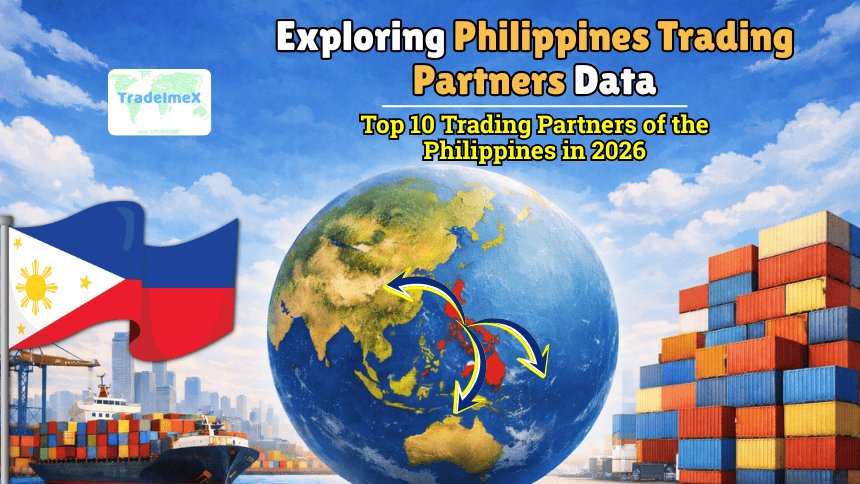
Exploring Philippines Trading Partners Data: Top 10 Trading Partners of the Philippines in 2025
Explore the Philippines largest trading partner and discover the top trading partners of Philippines. Get insights into key Philippines trade partners & trade trends.

International trade plays a critical role in the Philippine economy. As an export-driven and import-dependent country, the Philippines relies heavily on global markets for electronics, machinery, energy resources, food commodities, and industrial materials. The country’s trade relationships reflect its position within global supply chains, particularly in Asia-Pacific manufacturing networks. According to the latest Philippines import data, the total value of Philippines imports reached $134.88 billion in 2025, a 1% increase from the previous year. According to the latest Philippines export data, the total value of Philippines exports accounted for $72.98 billion in 2025, an increase of 1% from the previous year.
The total Philippines trade value was $207.86 billion in 2025, as per the Philippines customs data. In 2025, the Philippines continues to strengthen its connections with major economies such as the United States, China, Japan, and South Korea while expanding trade with ASEAN neighbors. These partnerships shape the country's economic growth, export performance, and industrial development.
This blog explores the top 10 trading partners of the Philippines in 2025, using recent trade statistics and data insights to understand their importance in the country’s trade ecosystem.
Overview of the Philippines Trade Landscape
Before analyzing individual partners, it is important to understand the structure of Philippine trade. The Philippines has a mixed trade structure, characterized by strong electronics exports and heavy reliance on imports for fuel, machinery, and industrial components.
Key Trade Facts (2025)
-
Electronics account for over 55% of Philippine exports, making them the country's dominant export category, as per the Philippines electronics export data by HS code.
-
The United States, Japan, Hong Kong, China, and Singapore consistently rank among the top export destinations.
-
China remains the largest source of imports, accounting for more than 26% of total imports in early 2025.
-
A majority of the Philippines’ trade occurs with APEC economies, which represent more than 80% of exports and over 85% of imports.
These figures highlight how closely the Philippines is integrated into regional and global supply chains.
Top 10 Trading Partners of the Philippines in 2025
The trade relationships with the major trading partners of the Philippines strengthen economic ties and drive international trade. Businesses often analyze the Philippines' major trading partners to understand what countries does the Philippines trade with and identify which nation ranks as the Philippines biggest trade partner in global trade. Based on trade data trends from the Philippine Statistics Authority, the following countries represent the top trading partners of the Philippines in 2025.
-
United States
-
China
-
Japan
-
Hong Kong
-
South Korea
-
Singapore
-
Taiwan
-
Thailand
-
Indonesia
-
Malaysia
These partners collectively account for the majority of the Philippines’ total trade value, as per the Philippines trade partners data. The Philippines largest trading partner plays a vital role in shaping the country’s international commerce and economic growth. Understanding the trade partners of the Philippines helps businesses analyze global supply chains and market opportunities. The Top 10 trading partners of the Philippines include major economies that contribute significantly to imports and exports, highlighting the importance of strong Philippines trading partners across Asia, North America, and Europe.
These markets also represent key Philippines export partners, supporting industries through diverse Philippines exports by country. At the same time, the nation imports a wide range of Philippines import products such as machinery, fuel, and electronic components, while exporting important Philippines export products like electronics, semiconductors, and agricultural goods.
Largest Import Partners of the Philippines: Philippines Imports by Country

The Philippines imports goods from various countries around the world. Among the top import partners of the Philippines are China, Indonesia, Japan, the United States, South Korea, and Thailand. These countries play a significant role in supplying products that cater to the needs of the Philippine market. The top 10 trading partners of Philippines for its imports, as per the Philippines imports by country and Philippines import trade data for 2025, include:
1. China: $34.49 billion (25.6%)
China has emerged as the top import partner of the Philippines, accounting for a substantial portion of the country's total imports, as per the data on the Philippines imports from China. With a diverse range of products and competitive pricing, Chinese goods have become a popular choice for Filipino consumers. From electronics to textiles, China offers a wide array of products that cater to the needs of the Philippine market.
2. Indonesia: $11.29 billion (8.4%)
Indonesia is another key player in the Philippines' import market, providing a range of commodities such as agricultural products, minerals, and textiles. The proximity between the two countries has facilitated trade relations, making Indonesia a viable source for various goods that are in demand in the Philippines.
3. Japan: $10.67 billion (7.9%)
Known for its high-quality products and advanced technology, Japan has established itself as a major import partner for the Philippines. Japanese cars, electronics, and machinery are highly sought after in the Philippine market, contributing significantly to the country's import economy.
4. South Korea: $10.02 billion (7.4%)
South Korea's strong presence in the global market extends to the Philippines, where it ranks as one of the top import partners. South Korean electronics, cosmetics, and automotive products are popular among Filipino consumers, driving substantial imports from South Korea.
5. USA: $8.84 billion (6.6%)
The United States remains a significant import partner for the Philippines, providing a wide range of goods and services to fulfill the country's diverse needs. From food products to machinery, American imports play a crucial role in supporting the Philippine economy and meeting consumer demands.
6. Thailand: $7.79 billion (5.8%)
Thailand's proximity to the Philippines and its competitive pricing have made it a key import partner for the country. Thai agricultural products, electronics, and automotive parts are among the top imports that cater to the needs of the Philippine market.
7. Malaysia: $6.23 billion (4.6%)
Malaysia's strong ties with the Philippines have positioned it as a significant import partner, providing a range of goods such as palm oil, electronics, and textiles. The strategic partnership between the two countries continues to drive imports from Malaysia to the Philippines.
8. Singapore: $5.99 billion (4.4%)
Singapore's status as a global trade hub has made it a vital import partner for the Philippines. With a focus on electronics, pharmaceuticals, and machinery, Singapore offers high-quality products that are in demand in the Philippine market.
9. Vietnam: $5.72 billion (4.2%)
Vietnam's growing economy and competitive pricing have made it an attractive import partner for the Philippines. Vietnamese textiles, seafood, and electronics are among the top imports that contribute to the country's import economy.
10. Taiwan: $4.15 billion (3.1%)
Taiwan's strong manufacturing sector and technological innovations have positioned it as a key import partner for the Philippines. Taiwanese electronics, machinery, and chemicals are among the top imports for the Philippine market.
Top 10 Export Partners of the Philippines: Philippines Exports by Country
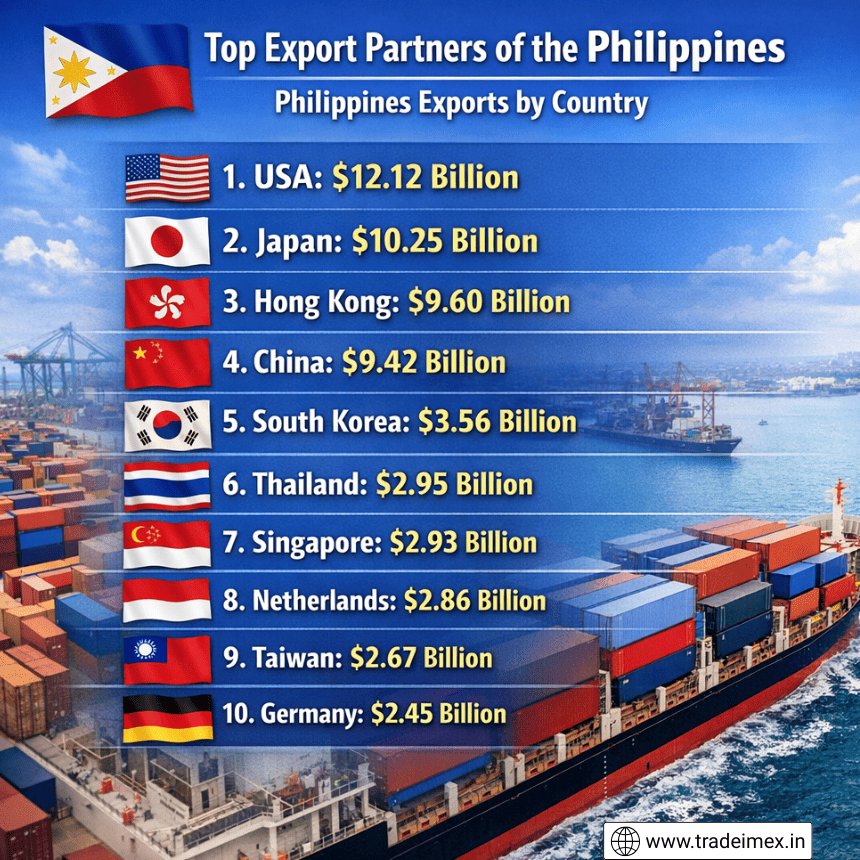
The Philippines boasts a diverse range of export partners that play a crucial role in the country's economy. Some of the top countries that import goods from the Philippines include the United States, Japan, China, Hong Kong, and South Korea. The steady growth in trade with these nations has helped solidify the Philippines' position as a key player in the global market. The largest export partners of the Philippines, as per the Philippines exports by country and Philippines shipment data for 2025, include:
1. USA: $12.12 billion (16.6%)
The United States is the largest export partner of the Philippines, accounting for a significant portion of the country's total exports, as per the data on Philippines exports to the USA. The strong trade relationship between the two countries has been beneficial for both parties, with the USA importing a wide range of products from the Philippines, including electronics, garments, and agricultural products.
2. Japan: $10.25 billion (14.1%)
Japan is another key export partner of the Philippines, with a substantial share of the country's total exports. The close economic ties between the two countries have led to a steady flow of goods between them, with Japan importing a variety of products from the Philippines, such as electrical machinery, mineral fuels, and coconut oil.
3. Hong Kong: $9.60 billion (13.2%)
Hong Kong plays a crucial role in the Philippines' export industry, serving as a major trading partner for the country. The proximity between the two countries has facilitated trade, with Hong Kong importing a diverse range of products from the Philippines, including electronic equipment, textiles, and fruits.
4. China: $9.42 billion (12.9%)
China is a significant export partner of the Philippines, with a substantial share of the country's total exports. The growing trade relationship between the two countries has opened up new opportunities for trade, with China importing a wide variety of products from the Philippines, such as bananas, coconut oil, and electronic products.
5. South Korea: $3.56 billion (4.9%)
South Korea is an important export partner for the Philippines, with a notable share of the country's total exports. The strong economic ties between the two countries have led to a flourishing trade relationship, with South Korea importing a range of products from the Philippines, including machinery, electronic equipment, and mineral fuels.
6. Thailand: $2.95 billion (4%)
Thailand is a significant export partner of the Philippines, contributing to the country's total exports. The close economic cooperation between the two countries has led to an increase in trade, with Thailand importing various products from the Philippines, such as fruits, beverages, and electronic products.
7. Singapore: $2.93 billion (4%)
Singapore plays a crucial role in the Philippines' export industry, with a significant share of the country's total exports. The strong trade relationship between the two countries has led to a steady flow of goods between them, with Singapore importing a diverse range of products from the Philippines, including machinery, mineral fuels, and electronic equipment.
8. Netherlands: $2.86 billion (3.9%)
The Netherlands is an important export partner for the Philippines, with a notable share of the country's total exports. The strong economic ties between the two countries have created new trade opportunities, with the Netherlands importing a variety of products from the Philippines, such as electronic equipment, machinery, and coconut oil.
9. Taiwan: $2.67 billion (3.7%)
Taiwan is a significant export partner of the Philippines, contributing to the country's total exports. The close economic cooperation between the two countries has led to an increase in trade, with Taiwan importing various products from the Philippines, including electronic equipment, machinery, and mineral fuels.
10. Germany: $2.45 billion (3.4%)
Germany is an important export partner for the Philippines, with a notable share of the country's total exports. The strong economic ties between the two countries have led to a flourishing trade relationship, with Germany importing a range of products from the Philippines, such as machinery, electronic equipment, and mineral fuels.

Key Export Products Driving the Philippines Trade
The Philippines’ trading relationships are shaped by the country’s export specialization.
Top Philippine Exports
-
Semiconductors
-
Electronic equipment
-
Machinery
-
Coconut oil
-
Copper and mineral products
-
Processed foods
-
Fruits such as bananas and pineapples
Electronics alone account for more than half of total export revenues, highlighting the importance of global technology supply chains for the Philippine economy.
Major Imports Supporting the Economy
Imports are equally critical because they support domestic manufacturing and consumption.
Key Imports
-
Petroleum and fuel
-
electronic components
-
industrial machinery
-
vehicles
-
steel and metals
-
chemicals
Many imported goods are used in manufacturing export products, creating integrated global supply chains.
Regional Trade Patterns of the Philippines
Trade data shows that the Philippines is deeply connected to the Asia-Pacific markets.
Key regional trends include:
-
East Asia accounts for nearly half of total imports.
-
ASEAN countries serve as both suppliers and export markets.
-
APEC economies dominate Philippine trade flows.
These patterns reflect the Philippines’ role in Asian manufacturing networks, especially electronics and semiconductor production.
Emerging Trends in Philippine Trade
Several trends are shaping the country’s trade relationships in 2025.
1. Supply Chain Diversification
Companies are expanding manufacturing outside China, benefiting countries like the Philippines.
2. Growth in Semiconductor Exports
Global demand for chips and electronics continues to drive Philippine export growth.
3. ASEAN Economic Integration
Regional trade agreements are strengthening intra-ASEAN trade.
4. Strategic Partnerships
The Philippines is balancing relationships with both Western economies and Asian manufacturing hubs.
Challenges in the Philippines Trade
Despite strong partnerships, the Philippines faces several trade challenges.
1. Trade Deficit
Imports continue to exceed exports due to demand for energy and machinery.
2. Infrastructure Gaps
Trade and port infrastructure can limit export competitiveness.
3. Global Economic Uncertainty
Trade tensions and tariffs may impact export markets.
Conclusion and Final Thoughts
The Philippines’ trade network in 2025 highlights the country's growing integration into global supply chains. The United States, China, and Japan remain the most influential trade partners of the Philippines, while regional economies such as Singapore, Thailand, and Indonesia continue to strengthen trade ties through ASEAN integration.
Together, the top 10 trading partners account for the majority of Philippine exports and imports, shaping the country’s economic trajectory. As global supply chains evolve, the Philippines is likely to expand its trade partnerships, particularly in electronics manufacturing, agricultural exports, & energy imports. Understanding these trading relationships provides valuable insights for businesses, investors, and policymakers looking to engage with the Philippine market.
Note for Our Readers
We hope this detailed analysis of the Top 10 Trading Partners of the Philippines in 2025, along with insights into the country’s key export sectors, major import sources, and evolving trade relationships, helps you better understand the dynamics shaping the Philippines’ global trade landscape.
If you are interested in gaining deeper visibility into the Philippines import-export data by country, HS code-level trade statistics, port-wise shipment records, and verified databases of Philippine exporters and importers, TradeImeX can support your market research, competitive analysis, and global expansion strategy.
For inquiries, partnerships, or to request a sample Philippines import-export trade database, feel free to contact us at info@tradeimex.in and discover how data-driven insights can help strengthen your position in the international trade market.
Share
What's Your Reaction?
 Like
0
Like
0
 Dislike
0
Dislike
0
 Love
0
Love
0
 Funny
0
Funny
0
 Angry
0
Angry
0
 Sad
0
Sad
0
 Wow
0
Wow
0