US-Iran Relations Enter a New Era: Peace Deal Impact on Oil Trade & Economic Outcome
Explore how the US-Iran peace deal, US-Iran framework agreement, & 14-point Iran deal could reshape oil trade, global markets, & US-Iran trade relations.


The US and Iran are major oil-trading countries in the world, but because of some military tension between them, it affects the price of oil in the global market. The year 2026 marks a significant shift in US-Iran relations, with a newly announced peace framework helping ease tensions that have affected global trade and energy markets for years. According to the market insights of the US export data & Iran import data, the US-Iran peace deal already influences the global oil prices and boosts the confidence of other countries and investors.
Iran sits near the Strait of Hormuz, a maritime corridor responsible for transporting nearly 20% of global oil consumption and approximately 17–20 million barrels of crude oil per day. As a result, even minor geopolitical changes between Washington and Tehran can have a measurable impact on the global oil market, shipping costs, inflation, and economic growth.
US-Iran Agreement
The recent US-Iran framework agreement, or the US-Iran peace deal, came after rising tensions in West Asia that created concerns about oil supply disruptions and shipping problems in the Strait of Hormuz. During this period of uncertainty, oil prices climbed above $120 per barrel, and shipping insurance costs increased due to security risks. According to the US Import Data report, the agreement helped calm fears of a long conflict and improved confidence in regional trade routes.
The framework reportedly includes:
-
A 60-day ceasefire agreement
-
Reopening of important shipping routes
-
Return of commercial shipping operations
-
Steps to reduce regional tensions
-
Continued diplomatic talks
-
Efforts to stabilize energy markets
The agreement is also being referred to as the US and Iran MOU, Iran memorandum of understanding, and US-Iran framework agreement.
Trump Signs Iran Deal: Developments
The agreement attracted worldwide attention after reports that Trump signed the MOU, and later, Trump signed the Iran deal, signaling a major diplomatic breakthrough. Many experts see this as a positive step toward reducing instability in West Asia and improving confidence in global trade. Soon after the announcement, as the US & Iranian presidents signed the deal, energy markets reacted positively as traders expected smoother oil transportation and lower shipping risks. Some of the most discussed US-Iran deal details include the following:
Some of the most discussed US-Iran deal details include the following:
-
Reopening of the Strait of Hormuz amid Trump’s Iran Deal
-
Resumption of commercial tanker movement
-
Lower geopolitical risks in the region
-
Better conditions for global energy trade
-
Possibility of future economic cooperation
Understanding the 14-Point Iran Deal
The reported 14-point Iran deal is seen as a roadmap for reducing tensions and improving economic stability rather than a final peace treaty. Available information suggests that the framework focuses on regional stability and uninterrupted trade. Its reported goals include the following:
-
Keeping shipping routes open
-
Supporting uninterrupted oil exports
-
Reducing military tensions
-
Promoting economic stability
-
Building trust between the two countries
The success of the framework will depend on continued cooperation and implementation. Experts believe that even a 10–15% reduction in shipping risks could save billions of dollars each year in freight and insurance costs.
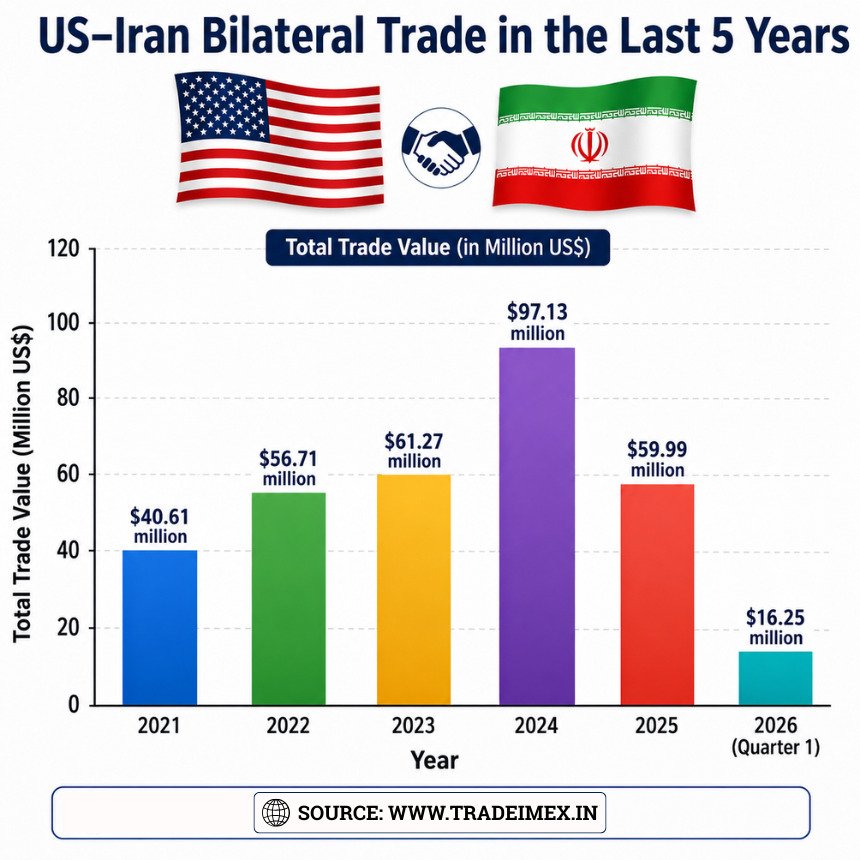
US–Iran Bilateral Trade in the Last 5 Years
|
Year |
Total Trade Value ($) |
|
2021 |
$40.61 million |
|
2022 |
$56.71 million |
|
2023 |
$61.27 million |
|
2024 |
$97.13 million |
|
2025 |
$59.99 million |
|
2026 (Quarter 1) |
$16.25 million |
According to this data, it indicates that:
-
Trade increased by nearly 40% from 2021 to 2022.
-
It grew another 8% in 2023.
-
Trade reached $97.13 million in 2024, the highest level during this period.
-
It dropped by around 38% in 2025 due to geopolitical uncertainty.
-
Trade in Q1 2026 reached $16.25 million, showing that business activity continued despite restrictions.
Importance of Oil Trade for the Peace Deal
The biggest and most immediate impact of the US-Iran peace deal can be seen in the global oil trade. Iran was located near the Strait of Hormuz, which makes it a key player in global energy transportation. According to the latest global trade report, about 20% of the world's oil supply passes through this route every day.
Major oil-exporting countries that depend on this route include:
-
Saudi Arabia
-
Iraq
-
Kuwait
-
United Arab Emirates
-
Qatar
-
Iran
Together, these countries export millions of barrels of oil daily. Any disruption in this route can quickly affect fuel prices and transportation costs around the world.
Impact of this deal on the global oil market
One of the clearest effects of the US-Iran peace deal signed has been its impact on the global oil market. According to Iran export data, oil prices reacted immediately after the agreement was announced and the Strait of Hormuz reopened. For countries that import large amounts of oil, even a $10 drop per barrel can save billions of dollars every year. The impacts of this US-Iran deal are the following:
-
Brent crude prices fell by nearly 5%.
-
WTI crude prices dropped below $81 per barrel.
-
Oil prices moved from above $120 per barrel during tensions to the low $80 range after the agreement.
-
Shipping risk costs declined.
-
Insurance costs started to stabilize.
-
Concerns about supply shortages eased.
Economic Outcomes Beyond Energy Markets
-
Lower Energy Costs
Reopening the Strait of Hormuz affects the price of oil because the Strait of Hormuz alone accounts for 20% of oil trade. A drop in oil prices from over $120 to around $80 per barrel means a reduction of nearly 33%, helping lower transportation and manufacturing costs worldwide.
-
Better Investor Confidence
Through the long years and high-tension conflict between the US and Iran, the risk for investors increased; due to this, they continuously withdrew their money, but after the US-Iran peace deal agreement and when geopolitical tensions decreased, investors were usually more willing to invest in markets that were previously considered risky. Global stock markets and energy-related shares responded positively after the announcement.
-
Stronger Global Trade
Open shipping routes help goods move more smoothly across countries and reduce delays. Lower freight costs can also improve profits for businesses involved in international trade.
-
Stable Supply Chain
After the peace deal between the long-standing conflict of the US and Iran, and reopening the Strait of Hormuz. Global supply chains work better when important shipping routes remain open and secure. Since the Strait of Hormuz handles energy shipments worth billions of dollars every week, uninterrupted operations are crucial for economic stability.
US-Iran Trade Relations & Peace Deal: Could Diplomacy Revive Bilateral Trade?
The geopolitical landscape surrounding US-Iran relations entered a new phase in 2026 after Washington and Tehran reached a preliminary peace framework aimed at reducing tensions and reopening key trade routes. According to reports, the agreement includes a ceasefire, discussions on sanctions relief, and efforts to ensure freedom of navigation through the Strait of Hormuz, one of the world's most important energy corridors.
Although the United States and Iran have maintained limited trade ties for decades because of extensive sanctions, a successful peace agreement could gradually reshape economic relations. Before sanctions tightened, the two countries engaged in trade involving agricultural products, medical supplies, pharmaceuticals, carpets, & industrial goods. Any easing of restrictions would likely create opportunities for increased exports & imports, particularly in humanitarian goods & energy-related sectors. Trade between the two nations remains relatively small.
According to data, total two-way trade has generally been below $100 million annually in recent years, with US exports to Iran consisting mainly of food products and medicines permitted under humanitarian exemptions. Meanwhile, Iranian exports to the United States have remained minimal due to sanctions and regulatory restrictions. The emerging peace deal could also have wider implications for global trade. Analysts believe that a durable diplomatic settlement could eventually pave the way for gradual normalization of trade relations, although major obstacles, including nuclear negotiations and regional security concerns, remain.
Challenges after this deal
The US-Iran framework agreement is an important first step, but continued cooperation will be necessary for lasting stability. Past events have shown that even short disruptions in the Gulf region can increase oil prices by 10–20% in a short time. Although the agreement has been welcomed by markets, several challenges still need to be addressed before long-term benefits can be achieved. There are still some challenges even after this deal was signed already, which are as follows:
-
Future sanctions policies
-
Regional security concerns
-
Nuclear-related negotiations
-
Compliance and verification systems
-
Long-term diplomatic commitments
Key Highlights of the US-Iran Peace Deal and Trade Outlook
-
2026 diplomatic breakthrough: The United States and Iran initiated a peace framework designed to reduce military tensions and revive negotiations on broader economic and security issues.
-
Potential sanctions relief: Any easing of US sanctions could gradually reopen trade opportunities in humanitarian goods, pharmaceuticals, medical equipment, and agricultural products.
-
Limited current trade: Bilateral trade between the US and Iran remains relatively small, with total annual two-way trade generally below $100 million, according to recent US trade statistics.
-
US exports to Iran: Permitted exports primarily include food products, medicines, and humanitarian supplies under existing exemptions.
-
Strategic importance of the Strait of Hormuz: Improved relations could help secure one of the world's most important shipping lanes, through which nearly 20% of global oil supplies are transported.
-
Impact on global energy markets: Reduced geopolitical risks in the Middle East may help stabilize crude oil prices and strengthen global supply chains.
-
Long-term trade opportunities: A comprehensive agreement could eventually pave the way for expanded cooperation in sectors such as:
-
Pharmaceuticals and healthcare products
-
Agricultural commodities
-
Civil aviation equipment
-
Industrial machinery
-
Energy and petrochemicals
-
Major challenges remain: Nuclear negotiations, regional security concerns, and existing sanctions frameworks continue to pose significant obstacles to full normalization of US-Iran trade relations.
Conclusion and Final Verdict
In conclusion, if the US-Iran agreement continues to work effectively, global markets could benefit from the smooth movement of more than 17 million barrels of oil per day, while businesses enjoy lower trade costs and stronger supply chains.
The reopening of the Strait of Hormuz and reduced geopolitical tensions have already shown how closely global markets are connected to developments in West Asia. While some uncertainties remain, the agreement is a major milestone in US-Iran relations and could play an important role in shaping global trade and energy markets in 2026 and the years ahead.
FAQs (Frequently Asked Questions)
1. What is the US-Iran peace deal?
The US-Iran peace deal is a diplomatic framework designed to reduce tensions, restore maritime trade, and improve regional stability.
2. What is the US-Iran framework agreement?
The US-Iran framework agreement is a broader understanding between the two countries focused on reducing conflict, supporting trade stability, and continuing diplomatic discussions.
3. What is the 14-point Iran deal?
The 14-point Iran deal is a reported roadmap that includes measures related to regional stability, trade normalization, and conflict reduction.
4. How does the peace deal affect the oil trade?
The agreement helps ensure smooth oil shipments through the Strait of Hormuz, which carries nearly 20% of global oil supplies and more than 17 million barrels per day, helping stabilize global oil trade.
5. What is the current US-Iran trade value?
According to US import data, US-Iran trade was $59.99 million in 2025, while trade in Quarter 1 of 2026 reached $16.25 million.
For the latest update on the global trade data or to search import-export data by country or HS code, you can contact TradeImeX at info@tradeimex.in & get customized trade database reports for business.
Read also about:
US Cotton Exports Data 2025-26
Share
What's Your Reaction?
 Like
0
Like
0
 Dislike
0
Dislike
0
 Love
0
Love
0
 Funny
0
Funny
0
 Angry
0
Angry
0
 Sad
0
Sad
0
 Wow
0
Wow
0