Exploring the Panama Import-Export Data 2025: Panama Major Exports, Imports & Top Trade Partners
Explore Panama import-export data for 2025 with insights on major exports, imports, top trade partners, HS codes, and global trade trends.


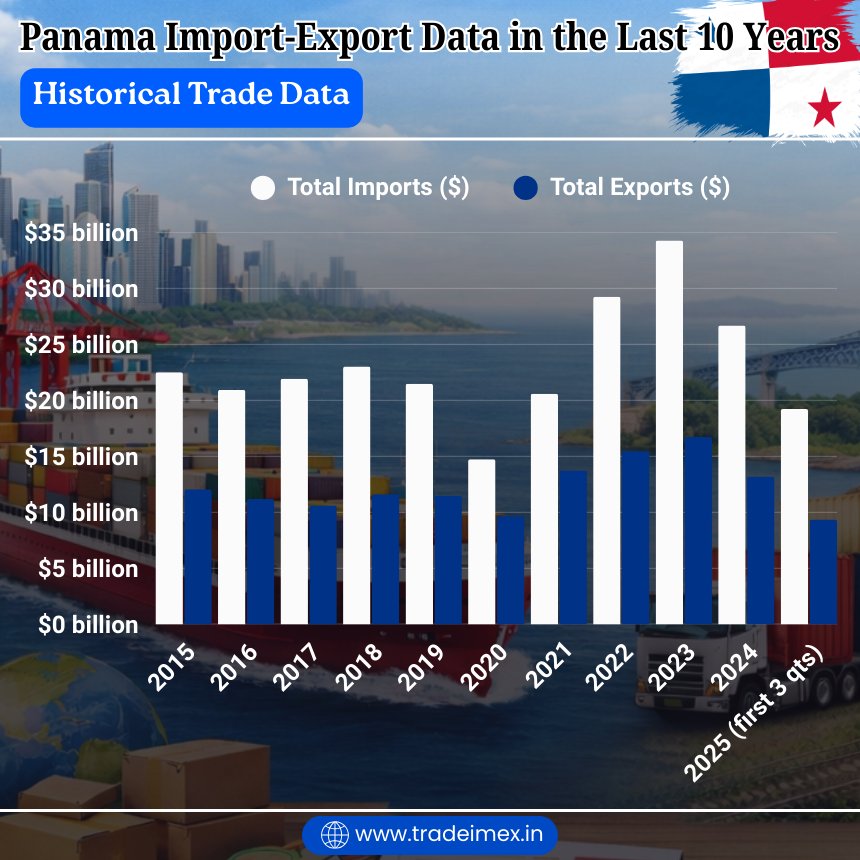
Panama occupies a unique position in global trade. Unlike many economies that rely primarily on manufacturing or natural resources, Panama’s strength lies in its geography, import-export infrastructure, and trade connectivity. According to the latest Panama import data, the total value of Panama imports reached $26.68 billion in 2024, a 22% decline from the previous year. Panama imported goods worth $19.22 billion in the first three quarters of 2025, as per the Panama import statistics. According to the latest Panama export data, the total value of Panama exports accounted for $13.18 billion in 2024, a 21% decline from the previous year. Panama exported goods worth $9.35 billion in the first three quarters of 2025, as per Panama export statistics & Panama customs data.
Panama is the 75th largest importer & the 92nd largest exporter in the world, according to global trade data. The Panama Canal, Colón Free Trade Zone, modern ports, and dollarized economy together form one of the most efficient trade ecosystems in Latin America. In 2025, Panama’s import-export performance reflected both continuity and change. Traditional export sectors such as agriculture and seafood remained dominant, while newer markets and value-added products continued to gain relevance. Imports remained high, driven by energy needs, capital goods, consumer products, and Panama’s role as a regional redistribution hub.
This article provides an in-depth, data-driven analysis of Panama’s import-export data in 2025, including trade values, product-wise trends, partner country statistics, and structural patterns shaping Panama’s foreign trade.
Panama’s Trade Structure in 2025
Panama’s trade model differs from most Latin American economies in three key ways:
-
Exports are relatively modest compared to GDP, but growing steadily.
-
Imports are large due to re-exports and trade activity.
-
Trade services and merchandise trade operate in parallel.
In 2025, Panama continued to operate with a structural merchandise trade deficit, offset in part by services such as canal tolls, banking, and tourism. Merchandise trade data remains essential, however, for understanding real-sector activity and supply chain dynamics. Panama’s trade turnover totaled $28.57 billion in the first three quarters of 2025, as per the Panama Economic Outlook Report 2025.
Panama Export Performance in 2025
Total Export Value
Panama’s exports showed strong momentum throughout 2025.
-
Registered merchandise exports (January–May 2025): USD 438.7 million
-
Year-on-year growth (Jan–May): +14.6%
-
First-quarter exports (registered + special regimes): USD 324.4 million
-
Q1 growth rate: +25.1%
-
Estimated registered exports by November 2025: USD 10 billion
This marks the highest export performance in more than a decade, indicating a recovery and expansion phase following global disruptions earlier in the decade.
Export Growth Drivers
Several factors supported export growth in 2025:
-
Strong external demand for food and seafood
-
Improved trade efficiency
-
Greater participation of small and medium exporters
-
Expanded access to Asian and European markets
-
Increased value-added exports from special economic zones
Top Imports of Panama: What Does Panama Import the Most?

In the context of Panama's imports, the country heavily relies on various products to sustain its economy. Among the top imports of Panama are refined petroleum, vehicles, medical instruments, and telephones. These items serve as vital components in meeting the country's domestic consumption demands and supporting industrial activities. The top 10 imports of Panama, as per the Panama import data for 2025, include:
1. Mineral Fuels & Oils (HS Code 27): $2.64 billion
One of the largest imports of Panama is mineral fuels and oils, which account for a significant portion of the country's total imports. With an annual value of $2.64 billion, Panama relies heavily on these resources to fuel its industries and meet the energy needs of its population.
2. Nuclear Reactors & Machinery (HS Code 84): $2.62 billion
Another major import for Panama is nuclear reactors and machinery, with an annual value of $2.62 billion, as per the Panama machinery import data by HS code. These imports play a crucial role in the country's infrastructure development and technological advancement, ensuring that Panama remains competitive on the global stage.
3. Electrical Machinery & Equipment (HS Code 85): $2.59 billion
Panama also imports a substantial amount of electrical machinery and equipment, valued at $2.59 billion annually. These imports are essential for powering Panama's homes, businesses, and industries, driving the country's economic growth and development.
4. Pharmaceutical Products (HS Code 30): $2.53 billion
The import of pharmaceutical products is another significant aspect of Panama's trade industry, with an annual value of $2.53 billion. These imports ensure that Panama has access to essential medications and healthcare supplies, supporting the well-being of its population.
5. Organic Chemicals (HS Code 29): $2.02 billion
Organic chemicals are also among the top imports of Panama, with an annual value of $2.02 billion. These imports are used in various industries, including manufacturing, agriculture, and healthcare, highlighting their importance to Panama's economy.
6. Vehicles (HS Code 87): $1.60 billion
The import of vehicles is another key aspect of Panama's trade industry, with an annual value of $1.60 billion. From cars and trucks to motorcycles and buses, Panama imports a wide range of vehicles to meet the transportation needs of its population.
7. Articles of Apparel, Not Knitted (HS Code 62): $1.19 billion
Panama also imports a significant amount of articles of apparel, not knitted, with an annual value of $1.19 billion. These imports include clothing, accessories, and footwear, catering to the fashion needs of Panama's residents.
8. Footwear (HS Code 64): $950.42 million
The import of footwear is another important aspect of Panama's trade industry, with an annual value of $950.42 million. These imports include shoes, sandals, boots, and other types of footwear, ensuring that Panama has access to a wide variety of options.
9. Essential Oils, Perfumery, Cosmetics (HS Code 33): $797.30 million
Essential oils, perfumery, and cosmetics are also among the top imports of Panama, with an annual value of $797.30 million. These imports are used in personal care products, beauty treatments, and aromatherapy, reflecting Panama's focus on health and wellness.
10. Beverages, Spirits, & Vinegar (HS Code 22): $734.51 million
Finally, Panama imports a significant amount of beverages, spirits, and vinegar, with an annual value of $734.51 million. These imports include alcoholic and non-alcoholic drinks, catering to the diverse tastes of Panama's population.
Major Exports of Panama: What Does Panama Export the Most?
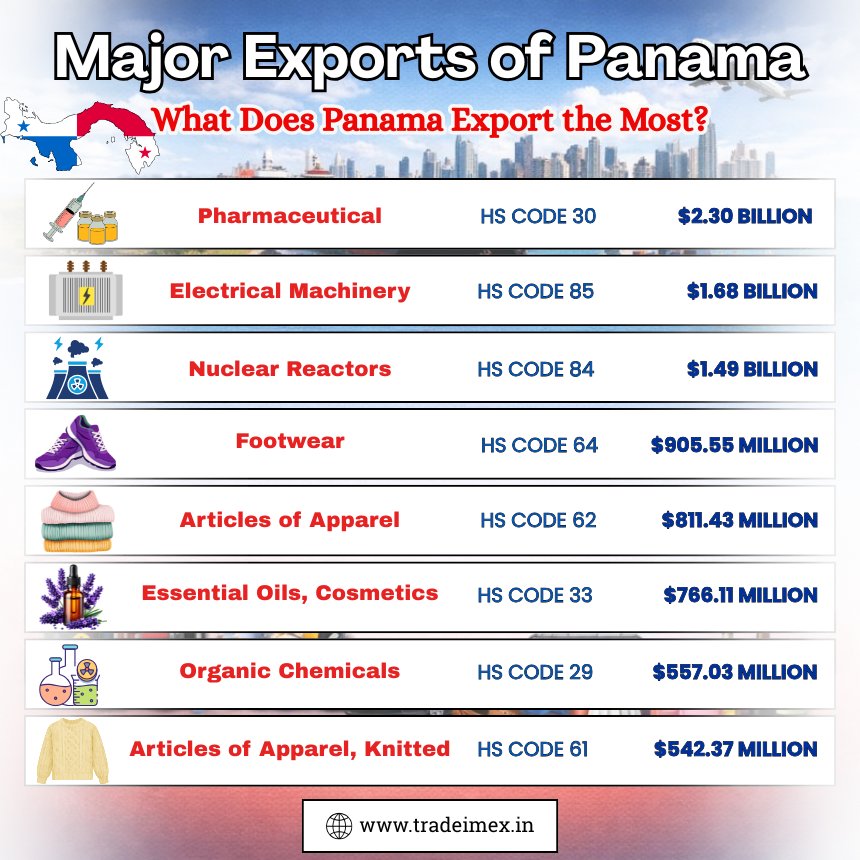
Panama primarily exports products like pharmaceuticals, bananas, shrimp, coffee, and sugar, making medicaments & agriculture a significant contributor to its economy. Alongside agricultural goods, the country also exports clothing and refined petroleum. The Panama Canal plays a vital role in the transportation of these goods, facilitating trade between the East and West. Panama's major exports, or the top 10 exports of Panama, as per the Panama shipment data for 2025, include:
1. Pharmaceutical Products (HS Code 30): $2.30 Billion
One of the top exports of Panama is pharmaceutical products, which include medications, vaccines, and other healthcare-related items, as per Panama pharmaceutical export data by HS code. With a total export value of $2.30 billion, pharmaceutical products play a crucial role in Panama's economy. The country has a strong pharmaceutical industry that produces high-quality products meeting international standards.
2. Electrical Machinery & Equipment (HS Code 85): $1.68 Billion
Another significant export category for Panama is electrical machinery and equipment, which accounts for $1.68 billion in exports. This sector includes products such as electrical generators, motors, and lighting equipment. Panama has a robust manufacturing industry that produces a wide range of electrical products for export.
3. Nuclear Reactors & Machinery (HS Code 84): $1.49 Billion
Panama also exports nuclear reactors and machinery, with a total export value of $1.49 billion. This category includes products related to nuclear power generation, as well as various types of machinery used in different industries. Panama's expertise in this sector has led to a steady increase in exports over the years.
4. Footwear (HS Code 64): $905.55 Million
Footwear is another major export for Panama, with a total export value of $905.55 million. This category includes shoes, boots, and other types of footwear designed and manufactured in Panama. The country has a thriving footwear industry that produces high-quality products for export to markets around the world.
5. Articles of Apparel, Not Knitted (HS Code 62): $811.43 Million
Panama also exports articles of apparel that are not knitted, with a total export value of $811.43 million. This category includes clothing items such as shirts, pants, and jackets made from various fabrics. Panama's apparel industry is known for its creative designs and high-quality garments.
6. Essential Oils, Perfumery, Cosmetics (HS Code 33): $766.11 Million
Essential oils, perfumery, and cosmetics are another major export category for Panama, with a total export value of $766.11 million. This sector includes a wide range of beauty and personal care products made in Panama. The country's cosmetics industry has gained popularity in global markets for its natural ingredients and sustainable practices.
7. Organic Chemicals (HS Code 29): $557.03 Million
Panama exports organic chemicals with a total export value of $557.03 million. This category includes various chemical compounds used in industries such as pharmaceuticals, agriculture, and manufacturing. Panama's chemical industry is known for producing high-quality organic chemicals meeting international standards.
8. Articles of Apparel, Knitted (HS Code 61): $542.37 Million
In addition to non-knitted apparel, Panama also exports articles of apparel that are knitted, with a total export value of $542.37 million. This category includes clothing items such as sweaters, socks, and hats made from knitted fabrics. Panama's textile industry is recognized for its innovative designs and trendy fashion items.
9. Beverages, Spirits, & Vinegar (HS Code 22): $519.13 Million
Beverages, spirits, and vinegar are also significant exports for Panama, with a total export value of $519.13 million. This category includes a wide range of alcoholic and non-alcoholic beverages produced in Panama. The country's beverage industry is known for its unique flavors and high-quality products.
10. Vehicles (HS Code 87): $350.92 Million
Lastly, Panama exports vehicles with a total export value of $350.92 million. This category includes cars, trucks, and other types of motor vehicles manufactured in Panama. The country's automotive industry has been growing steadily, with exports reaching international markets.
Top Trade Partners of Panama: Panama Imports & Exports by Country
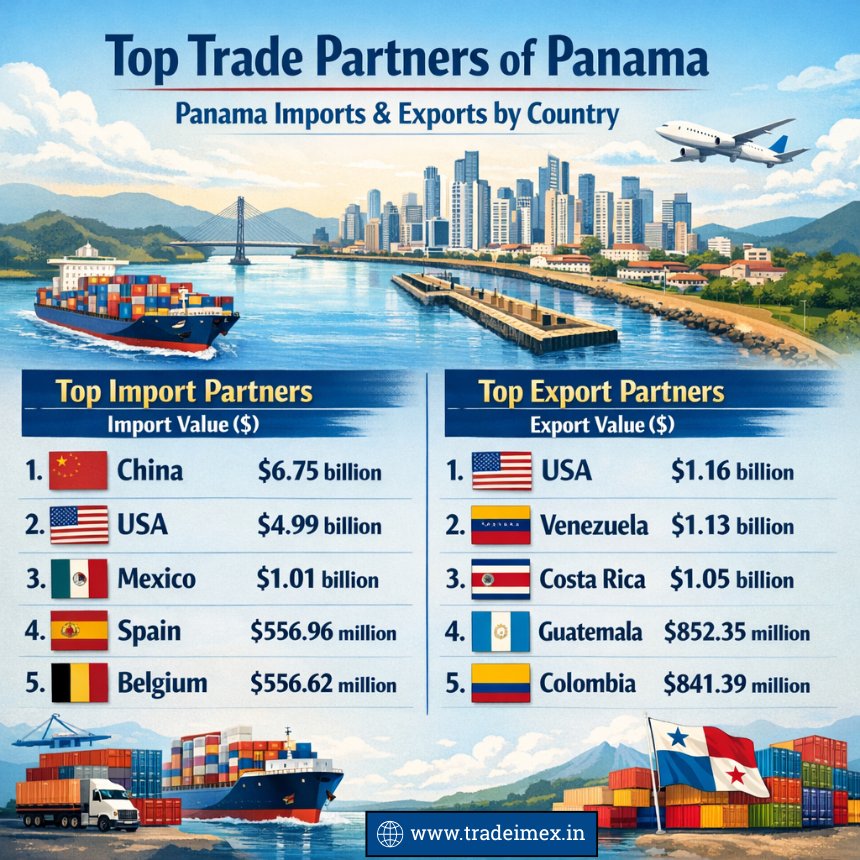
Panama, a country located at the crossroads of two continents, has established significant trade partnerships worldwide. The top trade partners of Panama in terms of imports and exports by country include the United States, China, Costa Rica, Mexico, and Japan. These countries play a crucial role in Panama's trade network, facilitating the exchange of goods and services that contribute to the country's economic growth. China is the biggest import partner of Panama, as per the data on Panama imports from China, while the USA is its largest export partner, as per the data on US imports from Panama. Panama's top import partners & export partners, or the major Panama trade partners, as per the Panama trade data for 2025, include:
|
Top Import Partners |
Import Value ($) |
Top Export Partners |
Export Value ($) |
|
1. China |
$6.75 billion |
1. USA |
$1.16 billion |
|
2. USA |
$4.99 billion |
2. Venezuela |
$1.13 billion |
|
3. Mexico |
$1.01 billion |
3. Costa Rica |
$1.05 billion |
|
4. Spain |
$556.96 million |
4. Guatemala |
$852.35 million |
|
5. Belgium |
$556.62 million |
5. Colombia |
$841.39 million |
Panama Import-Export Data in the Last 10 Years: Historical Trade Data
|
Year of Trade |
Total Imports ($) |
Total Exports ($) |
|
2015 |
$22.50 billion |
$12.06 billion |
|
2016 |
$20.93 billion |
$11.19 billion |
|
2017 |
$21.93 billion |
$10.60 billion |
|
2018 |
$23.01 billion |
$11.62 billion |
|
2019 |
$21.49 billion |
$11.47 billion |
|
2020 |
$14.73 billion |
$9.65 billion |
|
2021 |
$20.59 billion |
$13.73 billion |
|
2022 |
$29.24 billion |
$15.46 billion |
|
2023 |
$34.28 billion |
$16.73 billion |
|
2024 |
$26.68 billion |
$13.18 billion |
|
2025 (first 3 quarters) |
$19.22 billion |
$9.35 billion |
Panama’s Additional Trade Composition: Product-Wise Breakdown
Panama’s import-export basket in 2025 remained concentrated but showed signs of gradual diversification.
Top Export Categories (Share of Total Exports)
-
Seafood (fish, crustaceans, mollusks): 18–20%
-
Bananas and plantains: 17–18%
-
Frozen shrimp: 14–15%
-
Wood and wood products: 8–9%
-
Sugars and sugar derivatives: 6–7%
-
Fats, oils, and edible by-products: 5%
-
Manufactured and chemical goods: 5–6%
-
Other agricultural and industrial products: 20%
Agricultural Exports
Bananas remain Panama’s single most important agricultural export by value. In 2025:
-
Banana exports exceeded USD 150 million
-
Primary destinations included North America and Europe
-
Panama ranked among the top banana exporters in Central America
Other agricultural products included melons, pineapples, coffee, cocoa, and sugarcane derivatives. Although smaller in value, these products contributed to export diversification and rural employment.
Seafood Exports
Seafood exports continued to grow due to:
-
Rising demand in Asia
-
Competitive pricing
-
Improved cold-chain infrastructure
Key seafood exports included:
-
Frozen shrimp
-
Tuna
-
Fish fillets
-
Lobster and crab products
Combined seafood exports exceeded USD 170 million in 2025.
Industrial and Value-Added Goods
While still limited, exports of processed foods, medicines, & industrial inputs increased under special trade regimes. These exports benefit from tax incentives and modern industrial parks.
Top Import Categories (Share of Total Imports)
-
Mineral fuels and petroleum products: 25–27%
-
Machinery and mechanical appliances: 18–20%
-
Electrical machinery and electronics: 12–14%
-
Motor vehicles and transport equipment: 10–11%
-
Pharmaceuticals and medical products: 4–5%
-
Food and agricultural imports: 6–7%
-
Textiles, plastics, and consumer goods: 10–12%
-
Other imports: 7–9%
Energy Imports
Panama imports nearly all of its fuel needs. In 2025:
-
Petroleum and refined fuel imports exceeded USD 8 billion
-
Price volatility significantly influenced import values
-
Energy imports remained the largest contributor to the trade deficit
Capital Goods Imports
Machinery imports supported:
-
Construction
-
Trade expansion
-
Manufacturing
-
Energy infrastructure
High machinery imports indicate continued investment activity rather than weak domestic production.
Panama’s Free Trade Agreements (FTAs) and Their Role in 2025 Trade
Free Trade Agreements play a supporting but important role in shaping Panama’s import-export performance. While Panama’s trade advantages often matter more than tariff preferences, FTAs help exporters improve market access, reduce duties, and stabilize long-term trade relationships. As of 2025, Panama has over 20 trade agreements in force, covering more than 60 countries, including bilateral and regional accords.
Key FTAs in Force
Some of Panama’s most economically significant FTAs include agreements with:
-
United States
-
European Union
-
Canada
-
Mexico
-
Chile
-
Peru
-
Central American countries
-
Singapore
-
South Korea
-
Israel
-
Taiwan
Together, FTA partner countries account for over 70% of Panama’s total merchandise trade, underscoring their importance to the country’s external sector.
The Role of Free Trade Zones and Re-Exports
One of the most important features of Panama’s trade system is re-export activity, particularly through the Colón Free Trade Zone.
Key Characteristics
-
Imports enter Panama duty-free
-
Goods are stored, repackaged, or re-labeled
-
Products are re-exported to Latin America and the Caribbean
In 2025:
-
Re-exports accounted for over 40% of Panama’s total import flows
-
Electronics, apparel, pharmaceuticals, and machinery dominated re-exports
-
The free zone supported tens of thousands of jobs
This explains why Panama’s import values appear exceptionally high relative to domestic consumption.
Panama Trade Balance and Structural Patterns
Merchandise Trade Balance (2025 Estimate)
-
Exports: USD 10 billion
-
Imports: USD 25+ billion
-
Merchandise trade deficit: USD 15 billion
This deficit is structural and not necessarily negative. Panama offsets it through:
-
Canal toll revenues
-
Port services
-
Banking and financial services
-
Tourism and aviation
Key Trade Trends Observed in 2025
1. Export Diversification Is Slow but Real
Panama remains dependent on food exports, but value-added and industrial exports are rising gradually.
2. Asia’s Role Is Expanding
Asia is now as important as Europe for export growth, especially for seafood.
3. Imports Reflect Investment, Not Just Consumption
High machinery and equipment imports suggest long-term capacity building.
4. Connectivity Dominates Trade Strategy
Panama’s trade success depends more on efficiency and connectivity than volume.
Conclusion and Final Thoughts
In conclusion, the Panama import-export data for 2025 paints a picture of a small but highly strategic trading economy. Export growth reached multi-year highs, driven by seafood and agriculture, while imports remained large due to energy needs and Panama’s trade role. Trade partnerships continued to diversify geographically, with Asia and Europe gaining importance alongside traditional American partners.
Rather than competing as a manufacturing giant, Panama’s trade strength lies in connectivity, reliability, and strategic positioning. As global supply chains continue to evolve, Panama’s role as a bridge economy ensures that import-export activity will remain central to its economic future.
For more insights into the latest Panama trade data, or to search live Panama import-export data by country or product, visit TradeImeX. Contact us at info@tradeimex.in for customized trade reports and market insights.
Share
What's Your Reaction?
 Like
0
Like
0
 Dislike
0
Dislike
0
 Love
0
Love
0
 Funny
0
Funny
0
 Angry
0
Angry
0
 Sad
0
Sad
0
 Wow
0
Wow
0