
UK-EU Trade Deal Post-Brexit: What Businesses Need to Know in 2025
Explore the 2025 UK-EU Trade Deal, UK exports to EU, UK imports from EU, and Post-Brexit trade trends. Learn how the UK-EU Free Trade Agreement impacts business.


The UK and the EU have reached an agreement setting out post-Brexit relations on areas including fishing rights, trade, and defense. With Brexit now in full effect, businesses operating in the UK and EU have had to navigate a new trading landscape. The UK’s biggest trading partner is the European Union. Following the 21% decrease in exports and 7% decrease in imports since Brexit, the UK will be able to sell various products, like burgers and sausages, back into the EU, thereby supporting these essential British industries.
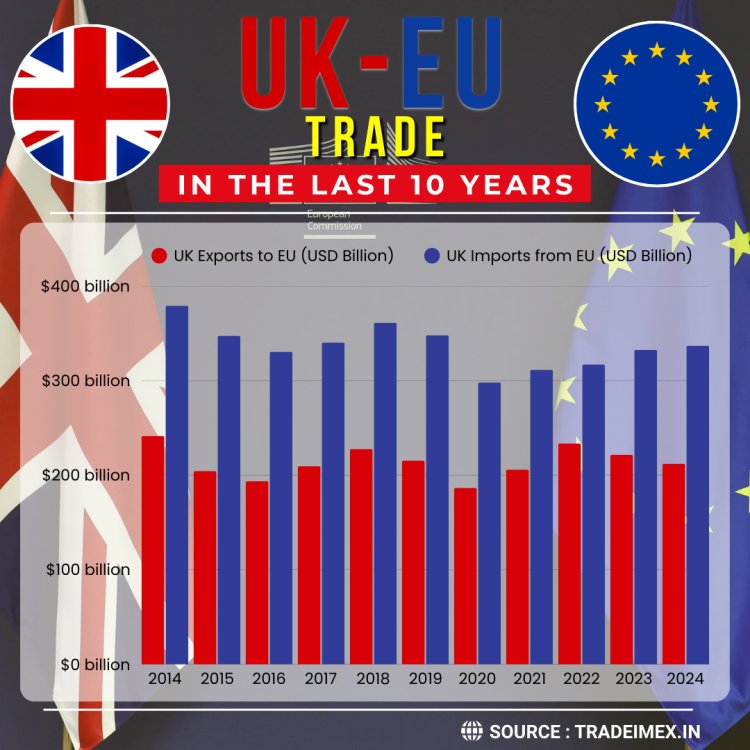
According to the United Kingdom import data, the UK imports from EU accounted for $336.78 billion in 2024, a 3% increase from the previous year. The total value of UK exports to EU reached $212.18 billion in 2024, a 4% decline from the prior year, as per the United Kingdom Export Data. The total value of the UK-EU trade reached over $548 billion in 2024.
The UK-EU Trade Deal, finalized in May 2025, has set the groundwork for how trade will be conducted between the two entities. As we look ahead to 2025, what do businesses need to know about the UK-EU Trade Deal and how it will impact their operations?
Key Provisions of the 2025 UK-EU Trade Deal
Five years after Brexit, the UK and EU have signed a new trade agreement aimed at reducing friction, restoring business confidence, and reviving cross-border commerce. While the deal offers significant benefits for sectors like food, retail, and services, it also includes contentious compromises, particularly in fishing. Here’s a comprehensive, data-driven breakdown of what businesses need to know in 2025.
|
Area |
What Changed |
|
Agrifood Trade |
Reduced border checks and paperwork for plant and animal products, easing trade and reducing costs. |
|
Fishing Access |
EU vessels granted continued access to UK waters for 12 years, in exchange for expanded market access for British seafood. |
|
Travel |
UK travelers can use EU e-gates, simplifying border crossings. |
|
Defense & Security |
The UK gains access to a €150 billion EU defense fund, enhancing cooperation in security matters. |
|
Annual Summits |
Commitment to yearly UK-EU summits to build on the agreement and address ongoing issues. |
Changes in Tariffs and Customs Procedures
One of the key aspects of the UK-EU trade agreement is the changes in tariffs and customs procedures. Businesses need to be aware of the new tariff rates for goods traded between the UK and the EU. These rates can impact the cost of imports and exports, affecting profit margins and pricing strategies, which can further impact the Europe trade data. Additionally, businesses must adhere to the updated customs procedures to ensure smooth and efficient cross-border trade.
Top 10 UK Exports to EU: UK-EU Export Trade
The Top 10 UK exports to the EU play a vital role in the UK-EU export trade relationship, showcasing a diverse range of products and services that have a significant impact on both economies. These exports include automobiles, pharmaceuticals, machinery, beverages, and financial services, among others, highlighting the interconnectedness and economic importance of the partnership between the UK and the EU. The top 10 goods that the UK exports to EU, as per the United Kingdom export shipment data for 2024, include:
- Nuclear Reactors and Machinery (HS Code 84): $32.88 billion
Nuclear reactors and machinery ranked as the top UK export to the EU in 2024, with a significant value of $32.88 billion. This sector reflects the UK's expertise in nuclear technology and engineering.
- Mineral Fuels and Oils (HS Code 27): $28.73 billion
Mineral fuels and oils are another major UK export to the EU, totaling $28.73 billion in 2024. The UK's rich natural resources and advanced extraction techniques contribute to its success in this sector.
- Vehicles (HS Code 87): $19.77 billion
The automotive industry plays a crucial role in the UK's exports to the EU, with vehicles amounting to $19.77 billion in 2024. The UK is known for producing high-quality cars and trucks that are in demand across the continent.
- Electrical Machinery and Equipment (HS Code 85): $14.39 billion
Electrical machinery and equipment are essential UK exports to the EU, reaching $14.39 billion in 2024. This sector includes a wide range of products, from household appliances to industrial machinery.
- Pharmaceutical Products (HS Code 30): $12.37 billion
The pharmaceutical industry is a key player in the UK's exports to the EU, with products totaling $12.37 billion in 2024. The UK is renowned for its innovative pharmaceutical research and development.
- Optical, Medical, and Surgical Instruments (HS Code 90): $9.79 billion
Optical, medical, and surgical instruments are highly valued UK exports to the EU, with a total of $9.79 billion in 2024. These high-tech products are essential for the healthcare sector.
- Aircraft, Spacecraft, and Parts Thereof (HS Code 88): $9.20 billion
The aerospace industry is a significant contributor to the UK's exports to the EU, with aircraft, spacecraft, and parts amounting to $9.20 billion in 2024. The UK is a leader in aerospace technology and manufacturing.
- Plastics and Articles Thereof (HS Code 39): $7.47 billion
Plastics and articles made from them are important UK exports to the EU, reaching $7.47 billion in 2024. These versatile products are used in various industries, including packaging and construction.
- Precious Stones and Metals (HS Code 71): $4.40 billion
The UK's exports of precious stones and metals to the EU totaled $4.40 billion in 2024. This sector includes diamonds, gold, and other valuable materials.
- Essential Oils, Perfumery, & Cosmetics (HS Code 33): $4.02 billion
Essential oils, perfumery, and cosmetics are popular UK exports to the EU, amounting to $4.02 billion in 2024. The UK has a strong reputation for producing high-quality beauty and fragrance products.
Top 10 UK Imports from EU: UK-EU Import Trade
In the realm of UK-EU import trade, the Top 10 UK imports from the European Union span a diverse range of goods and services, showcasing the intricate economic relationship between the two entities. From machinery and vehicles to pharmaceuticals and electronics, these imports play a crucial role in sustaining various sectors of the UK economy. The top 10 goods that the United Kingdom imports from EU, as per the United Kingdom import data for 2024, include:
- Vehicles (HS code 87): $61.75 billion
The automotive industry plays a crucial role in the UK economy, with a significant portion of vehicles being imported from EU countries. Cars, trucks, and other motor vehicles fall under this category and top the list of UK imports from the EU in 2024.
- Nuclear reactors and machinery (HS code 84): $42.34 billion
Nuclear reactors, boilers, machinery, and mechanical appliances are among the key imports from EU countries to the UK. This category encompasses a wide range of equipment and machinery necessary for various industries in the UK.
- Electrical machinery and equipment (HS code 85): $19.53 billion
Electrical machinery and equipment are essential for powering various sectors in the UK, including manufacturing, construction, and telecommunications. These imports contribute significantly to the country's infrastructure and technological advancements.
- Pharmaceutical products (HS code 30): $18.22 billion
The healthcare sector heavily relies on pharmaceutical products imported from EU countries. Medicines, vaccines, and other medical supplies fall under this category, playing a critical role in ensuring the health and well-being of the UK population.
- Mineral fuels and oils (HS code 27): $14.97 billion
As an energy-intensive country, the UK imports a substantial amount of mineral fuels and oils from the EU. These resources power various industries, transport systems, and households across the country, making them indispensable imports.
- Precious stones and metals (HS code 71): $12.83 billion
Precious stones and metals, including gold, silver, and diamonds, are valuable imports for the UK. These materials are used in jewelry, electronics, and other high-end products, contributing to the country's luxury goods market.
- Plastics and articles thereof (HS code 39): $11.53 billion
Plastics and plastic products are essential imports for the UK's manufacturing sector. From packaging materials to consumer goods, plastics play a crucial role in various industries, making them a significant import category from the EU.
- Optical, medical, & surgical instruments (HS code 90): $9.75 billion
Optical, medical, and surgical instruments are vital for the healthcare industry in the UK. These imports include medical devices, diagnostic equipment, and surgical tools that support healthcare professionals in delivering quality medical care.
- Beverages, spirits, and vinegar (HS code 22): $7.50 billion
The UK imports a variety of beverages, spirits, and vinegar from EU countries to meet consumer demand. From wine and beer to spirits and soft drinks, these imports cater to the diverse tastes of the UK population.
- Preparations of cereals and pastrycook products (HS code 19): $6.61 billion
Preparations of cereals and pastry cook products are popular imports in the UK, featuring a wide range of food products such as breakfast cereals, baking ingredients, and pastry items. These imports cater to the culinary preferences of UK consumers.
UK–EU Trade by Country: Top 10 UK Trade Partners from the EU (2024)
According to the data on UK imports by Country and EU-UK trade data, Germany is the biggest trade partner of the UK in the European Union, as per the data on Germany imports from the United Kingdom, followed by the Netherlands, as per the data on Netherlands exports to the United Kingdom. The top 10 UK trade partners in the EU, as per the UK trade data for 2024, include:
|
Rank |
Country |
Total Trade (USD Billion) |
% of UK Total Trade |
|
1 |
Germany |
$185.04 billion |
8.5% |
|
2 |
Netherlands |
$137.92 billion |
6.4% |
|
3 |
France |
$131.57 billion |
6.1% |
|
4 |
Ireland |
$100.08 billion |
4.6% |
|
5 |
Spain |
$79.25 billion |
3.7% |
|
6 |
Belgium |
$75.44 billion |
3.5% |
|
7 |
Italy |
$65.15 billion |
3.0% |
|
8 |
Sweden |
$35.56 billion |
1.6% |
|
9 |
Poland |
$31.12 billion |
1.4% |
|
10 |
Denmark |
$26.92 billion |
1.2% |
UK-EU Trade in the Last 10 Years: Yearly UK-EU Bilateral Trade Data
|
Year |
UK Exports to EU ($) |
UK Imports from EU ($) |
|
2014 |
$241.56 billion |
$379.26 billion |
|
2015 |
$204.32 billion |
$347.48 billion |
|
2016 |
$193.56 billion |
$330.60 billion |
|
2017 |
$209.52 billion |
$340.26 billion |
|
2018 |
$227.74 billion |
$361.31 billion |
|
2019 |
$215.35 billion |
$348.09 billion |
|
2020 |
$186.60 billion |
$297.99 billion |
|
2021 |
$205.84 billion |
$311.50 billion |
|
2022 |
$233.56 billion |
$317 billion |
|
2023 |
$221.39 billion |
$332.64 billion |
|
2024 |
$212.18 billion |
$336.78 billion |
UK-EU Trade Snapshot (2024)
|
Metric |
Value (2024) |
Change from 2019 (Real Terms) |
|
UK Exports to EU |
$212.18 billion |
-18% |
|
UK Imports from EU |
$336.78 billion |
-15% |
Sectoral Impact Analysis
Food & Retail
- Positive Developments: The reduction in border checks and paperwork for plant and animal products is expected to ease trade and reduce costs, benefiting food sellers and retailers.
- Challenges: Some businesses may need to adjust to new compliance requirements and ensure alignment with EU standards.
Fishing Industry
- Concerns: The 12-year access granted to EU fishing vessels has been met with criticism from UK fishermen, who feel the deal compromises their interests.
- Opportunities: In exchange, British seafood exporters gain expanded access to EU markets, potentially boosting sales.
Services Sector
- Growth: UK services exports to the EU have increased by 19% compared to 2019, indicating resilience and growth in this sector.
- Considerations: Businesses should stay informed about regulatory changes and ensure compliance with both UK and EU service standards.
Business Takeaways
- Stay Informed: Regularly review updates from official sources to stay abreast of changes in trade regulations and agreements.
- Compliance: Ensure that your business complies with the latest standards and requirements for trading with EU partners.
- Strategic Planning: Evaluate the implications of the new trade deal on your supply chain, pricing, and market access strategies.
- Engage with Stakeholders: Maintain open communication with suppliers, customers, and industry bodies to navigate the evolving trade landscape effectively.
Economic Impact of the US-EU Trade Deal
- Annual Economic Boost: The UK government estimates the trade deal could boost the UK economy by $11.43 billion/year by 2040.
- Brexit Loss Context: The UK's long-term economic loss from Brexit is estimated at 4% of GDP, or around $127 billion/year. So, the new deal would offset only about 9% of the total loss.
UK-EU Bilateral Trade Data 2025
March 2025 (Monthly Figures):
- Total UK Exports (Mar 2025): $22.35 billion
- Exports to EU (Mar 2025): $18.16 billion (Up 1.6% from February 2025)
Sectoral Highlights
- Agri-Food: Reduced checks on animal/plant products. No direct USD impact yet, but smoother trade is expected to increase export/import volumes in 2025–2026.
- Fishing: The EU granted extended fishing rights in UK waters for 12 years. While there's no direct dollar valuation, UK fishers claim potential tens of millions of USD in lost revenue due to competition.
Business Sentiments
- Northern Irish businesses anticipate cost savings and easier compliance, especially with the streamlined SPS rules.
- However, many SMEs say post-Brexit adaptations (e.g., new supply chains) may limit short-term financial gains.
Summary Table for US-UK Trade Deal
|
Indicator |
GBP (£) |
USD ($) |
|
Projected Economic Boost (2040) |
9B/year |
$11.43B/year |
|
Brexit GDP Loss (Est.) |
100B/year |
$127B/year |
|
UK Exports to EU (2024) |
£246B |
$212B |
|
UK Imports from EU (2024) |
£331B |
$336B |
|
UK Total Exports (Mar 2025) |
£17.6B |
$22.35B |
|
UK Exports to EU (Mar 2025) |
£14.3B |
$18.16B |
Conclusion
In conclusion, the UK-EU Trade Deal post-Brexit presents both challenges and opportunities for businesses. By understanding the key aspects of the deal and how they may impact operations, businesses can position themselves for success in 2025 and beyond. Staying informed, remaining agile, and prioritizing compliance will be crucial for businesses to thrive in the new trading environment.
We hope that you liked our informative blog report on the historic UK-EU trade deal 2025. Visit TradeImeX to get the latest global trade trends along with global trade data reports. Contact us at info@tradeimex.in and get our exclusive customized database report for the UK import-export data for the first quarter of 2025!
Share
What's Your Reaction?
 Like
0
Like
0
 Dislike
0
Dislike
0
 Love
0
Love
0
 Funny
0
Funny
0
 Angry
0
Angry
0
 Sad
0
Sad
0
 Wow
0
Wow
0


