US Rice Imports Data 2025: Latest USA Rice Importers Database & Rice Imports by Country
Explore US rice import data for 2025 with the latest USA rice importers database. Get detailed insights on rice imports by country & market analysis to grow your business.

The United States is one of the world’s largest agricultural producers, yet it continues to import significant volumes of rice every year. This might seem counterintuitive at first, but the reason lies in consumer preferences, product variety, & global trade economics. According to the latest US import data and Rice import data of the USA, the total value of US rice imports reached $1.63 billion in 2025, a 1% increase from the previous year. The US imported rice totaling 1.48 million tons in 2025, according to US rice import data.
The USA is the 4th largest rice importer worldwide, according to global trade data. In 2025, U.S. rice imports reached record or near-record levels, driven largely by demand for aromatic rice varieties such as basmati and jasmine. At the same time, global supply shifts, pricing pressures, and changing trade dynamics have reshaped the import landscape. This blog takes a data-driven look at U.S. rice imports in 2025, including import volumes, key supplying countries, importer trends, and insights into the latest USA rice importers database.
Overview of U.S. Rice Imports
The U.S. rice import market has expanded steadily over the past two decades. Imports have more than tripled since the early 2000s, largely due to diversification in consumer demand, as per the USA rice trade data.
By 2024–2025, the market reached historic highs:
-
Total import value (2025): $1.63 billion
-
Total import volume: 1.48 million metric tons
-
2026 projection: Record-high import levels, exceeding 47 million cwt (2.13 million tons equivalent)
Key takeaway
The U.S. is not importing rice due to a shortage, but to meet specific quality and variety demands that domestic production does not fully cover.
Why the U.S. Imports Rice
Understanding the “why” behind imports is crucial before diving into the data.
1. Demand for Aromatic Rice
Most U.S. imports are:
-
Jasmine rice from Thailand
-
Basmati rice from India and Pakistan
These varieties are not widely grown in the U.S. and are preferred by:
-
Asian and Middle Eastern communities
-
Restaurants and foodservice chains
-
Premium grocery segments
2. Price Competitiveness
Imported rice can sometimes be cheaper due to:
-
Lower production costs in Asia
-
Currency advantages
-
Large-scale export systems
3. Product Diversity
Imports also include:
-
Specialty rice (organic, aged, parboiled)
-
Regional varieties (Sona Masoori, Ponni, etc.)
-
Processed rice products
Shipment-level data & USA rice import data show imports of multiple niche rice types from India and Southeast Asia, even in small volumes.
US Rice Imports by Country: Where Does the US Import Rice From?
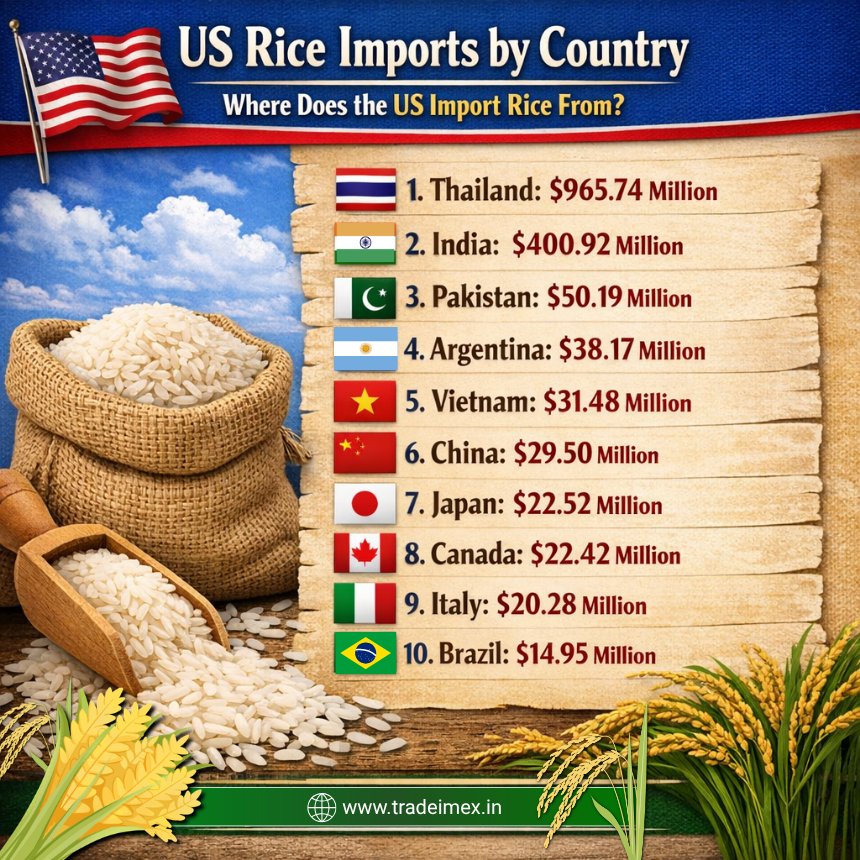
When it comes to rice consumption, the United States is one of the world's largest importers. The US Rice Imports by Country data shows that the United States imports rice from various countries worldwide. The primary sources of rice imports for the US include Thailand, India, Argentina, and Vietnam. These countries often offer a variety of rice that caters to the diverse preferences of American consumers. The top 10 rice supplier countries to the USA, as per the American rice import data and US shipment data for 2025, include:
1. Thailand: $965.74 million (58.9%)
Thailand is the largest supplier of rice to the United States, accounting for nearly 59% of the total rice imports, as per the data on US rice imports from Thailand by HS code. Thai rice is known for its quality & aroma, making it a popular choice among consumers in the US. The US imports a significant amount of rice from Thailand to cater to the growing demand for this staple food.
2. India: $400.92 million (24.5%)
India is another major supplier of rice to the US market, accounting for around 24.5% of the total rice imports, as per the data on US rice imports from India. Indian rice varieties such as Basmati and Jasmine rice are highly sought after for their unique flavors and textures. The US imports a substantial amount of rice from India to meet diverse consumer preferences.
3. Pakistan: $50.19 million (3.1%)
Pakistan is also a key player in the US rice import market, accounting for approximately 3.1% of total rice imports. Pakistani rice is valued for its long grains and aromatic qualities, making it a popular choice for various rice dishes. The US imports a considerable amount of rice from this country to meet consumer demand nationwide.
4. Argentina: $38.17 million (2.3%)
Argentina is a minor but significant supplier of rice to the United States, accounting for around 2.3% of the total rice imports. Argentine rice is known for its high quality and nutritional value, making it a preferred choice for health-conscious consumers. The US imports a notable amount of rice from Argentina to diversify its rice supply.
5. Vietnam: $31.48 million (1.9%)
Vietnam is another emerging player in the US rice import market, accounting for approximately 1.9% of total rice imports. Vietnamese rice varieties such as Jasmine and Sticky rice are gaining popularity among American consumers for their distinctive flavors and textures. The US imports a growing amount of rice from Vietnam to meet evolving consumer tastes.
6. China: $29.50 million (1.8%)
China is a relatively minor supplier of rice to the US market, accounting for around 1.8% of the total rice imports. Chinese rice is known for its versatility and affordability, making it a budget-friendly option for consumers. The US imports a modest amount of rice from China to provide a diverse range of choices to consumers.
7. Japan: $22.52 million (1.4%)
Japan is a niche supplier of rice to the United States, accounting for approximately 1.4% of total rice imports. Japanese rice varieties such as Koshihikari and Sasanishiki are prized for their premium quality and taste, making them a preferred choice for sushi and other Japanese dishes. The US imports a limited amount of rice from Japan to meet specific consumer preferences.
8. Canada: $22.42 million (1.4%)
Canada is a minor but noteworthy supplier of rice to the US market, accounting for around 1.4% of the total rice imports. Canadian rice is known for its purity & sustainable farming practices, making it a reliable choice for environmentally conscious consumers. The US imports a decent amount of rice from Canada to support sustainable agriculture practices.
9. Italy: $20.28 million (1.2%)
Italy is a niche supplier of rice to the US market, accounting for approximately 1.2% of total rice imports. Italian rice varieties such as Arborio and Carnaroli are famous for their use in risotto and other gourmet dishes. The US imports a small amount of rice from Italy to offer premium options to discerning consumers.
10. Brazil: $14.95 million (1%)
Brazil is a minor player in the US rice import market, accounting for around 1% of the total rice imports. Brazilian rice is known for its adaptability across various cuisines, making it a popular choice for consumers. The US imports a modest amount of rice from Brazil to enhance the diversity of its rice supply.
US Rice Importers Database & Shipment Records: Top Rice Buyers in USA
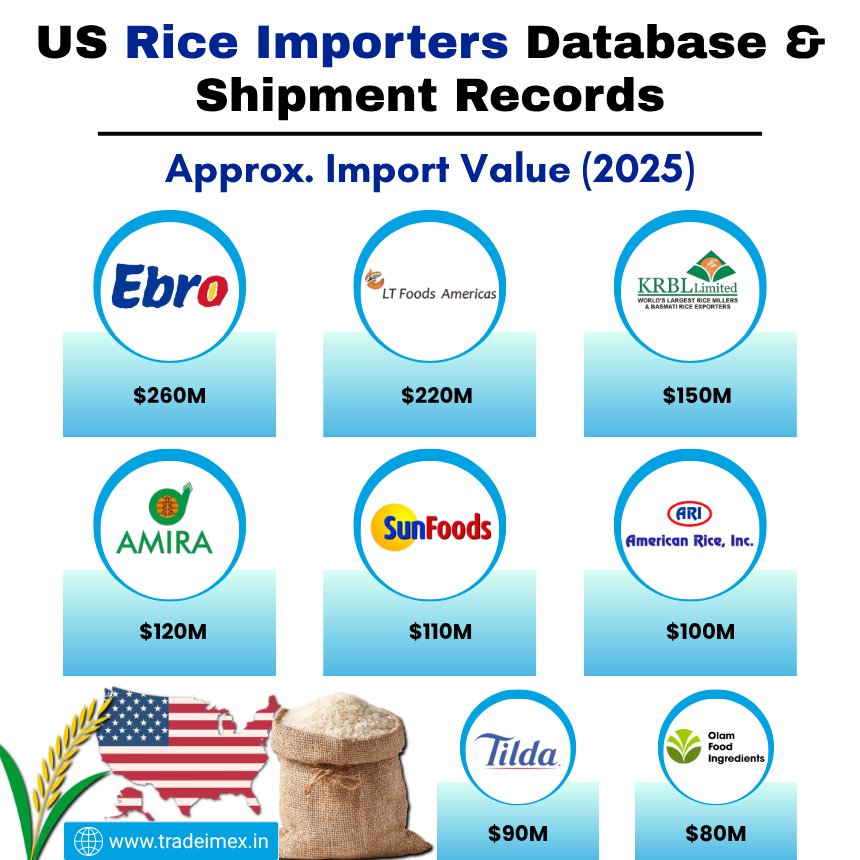
The US Rice Importers Database & Shipment Records provide valuable insights into the top rice buyers in the USA. This comprehensive database provides detailed information on rice importers in the US and their shipment records, enabling businesses to make informed decisions when handling rice imports. The leading rice importers in the USA, as per the USA rice importers & rice buyers data for 2025, include:
1. Ebro Foods (Riviana Foods Inc.)
-
Approx. import value: $260M
-
Top import types: Jasmine rice, basmati, specialty rice
-
Top import sources: Thailand, India
2. LT Foods Americas (Daawat / Royal)
-
Approx. import value: $220M
-
Top import types: Basmati, premium aged rice
-
Top import sources: India
3. KRBL USA (India Gate brand)
-
Approx. import value: $150M
-
Top import types: Basmati rice
-
Top import sources: India
4. Amira Nature Foods Ltd.
-
Approx. import value: $120M
-
Top import types: Organic and premium basmati
-
Top import sources: India
5. SunFoods LLC / SunWest Foods
-
Approx. import value: $110M
-
Top import types: Jasmine rice, long grain, bulk rice
-
Top import sources: Thailand, Vietnam
6. American Rice Inc. (part of Ebro)
-
Approx. import value: $100M
-
Top import types: Bulk rice, private label rice
-
Top import sources: Thailand, Pakistan
7. Tilda America (Associated British Foods)
-
Approx. import value: $90M
-
Top import types: Premium basmati and specialty rice
-
Top import sources: India, Pakistan
8. Olam Americas (ofi – Olam Food Ingredients)
-
Approx. import value: $80M
-
Top import types: Bulk and industrial rice
-
Top import sources: Vietnam, India
9. Patel Brothers (Retail + Import arm)
-
Approx. import value: $70M
-
Top import types: Basmati, Sona Masoori
-
Top import sources: India
10. Eastland Food Corporation
-
Approx. import value: $60M
-
Top import types: Jasmine rice, glutinous rice
-
Top import sources: Thailand, Vietnam
US Rice Import Data for the Last 10 Years

|
Year of Imports |
US Rice Import Value ($) |
Imported Quantity (Tons) |
|
2015 |
$791.29 million |
743.36 thousand tons |
|
2016 |
$714.43 million |
753.18 thousand tons |
|
2017 |
$727.63 million |
767.44 thousand tons |
|
2018 |
$966.54 million |
895.65 thousand tons |
|
2019 |
$1.08 billion |
963.49 thousand tons |
|
2020 |
$1.28 billion |
1.18 million tons |
|
2021 |
$1.01 billion |
1.16 million tons |
|
2022 |
$1.40 billion |
1.29 million tons |
|
2023 |
$1.42 billion |
1.33 million tons |
|
2024 |
$1.61 billion |
1.43 million tons |
|
2025 |
$1.63 billion |
1.48 million tons |
USA Rice Importers Statistics: Structure & Insights
The U.S. rice import ecosystem includes thousands of buyers, distributors, and retailers. The list of rice importers in USA includes major global agribusiness companies such as Riviana Foods Inc., Archer Daniels Midland (ADM), Cargill Inc., and Louisiana Rice Mill, which are among the top rice importers in USA and active rice buyers in USA handling large-scale shipments of aromatic and specialty rice varieties. So, does the US import rice? Yes, despite being a producer, the country relies on imports to meet demand for specific varieties like basmati and jasmine.
In fact, how much rice does the US import is significant, with around 1.3 to 1.5 million metric tons imported annually, making the U.S. one of the leading rice-importing countries globally. The process of importing rice to USA is driven by consumer preference for Asian aromatic rice and diverse food consumption patterns, while thousands of verified companies and distributors act as rice buyers in USA, creating a strong and competitive import market.
1. Scale of Importers
-
14,000+ U.S. rice buyers identified in trade databases
-
15,000+ global exporters supplying the U.S.
This highlights a highly fragmented import network.
2. What a Rice Importers Database Includes
A rice importers database has datasets such as:
-
Importer names and company profiles
-
Shipment records (bill of lading)
-
Product descriptions (HS Code 1006)
-
Quantity
-
Port of entry (e.g., Los Angeles, Houston, New York)
-
Supplier country and exporter details
Types of U.S. Rice Importers
1. Large Food Corporations
-
National retail brands
-
Packaged food companies
-
Private label suppliers
2. Ethnic Food Importers
-
Indian, Thai, and Vietnamese distributors
-
Specialty grocery chains
3. Wholesale Distributors
-
Bulk buyers for restaurants and foodservice
4. Retail Chains
-
Supermarkets sourcing directly or via distributors
US Rice Import Shipment-Level Trends (2025 Insights)
Trade shipment data reveals granular insights about U.S. rice imports:
1. Product-Level Diversity
Examples of imports include:
-
Sona Masoori rice
-
Ponni raw rice
-
Matta rice
-
Sushi rice base
2. Growth Patterns
-
Monthly shipments show strong volatility
-
Some months record 100%+ year-on-year growth spikes
-
Driven by seasonal demand and pricing cycles
Market Trends Shaping U.S. Rice Imports
1. Rising Demand for Premium Rice
Consumers are shifting toward:
-
Organic rice
-
Aged basmati
-
Specialty grains
This is pushing imports upward despite domestic production capacity.
2. Strong Growth in Indian Rice Imports
India’s dominance is expected to continue due to:
-
Massive export surplus
-
Competitive pricing
-
Global leadership (40% share of global rice exports in 2025)
3. Increased Competition from Global Suppliers
Countries like:
-
Brazil
-
Uruguay
-
Paraguay
They are expanding their footprint in the global rice trade and competing with traditional suppliers.
4. Price Volatility
Global rice prices hit record highs in 2024–2025:
-
Over $600 per ton average export price
This affects:
-
Import volumes
-
Supplier selection
-
Contract structures
Challenges in the U.S. Rice Import Market
1. Supply Chain Disruptions
-
Shipping delays
-
Port congestion
-
Freight cost fluctuations
2. Regulatory Compliance
Importers must comply with:
-
FDA food safety regulations
-
USDA import standards
-
Labeling and traceability requirements
3. Currency & Trade Policies
Exchange rate movements significantly impact:
-
Import costs
-
Supplier competitiveness
Opportunities for Businesses
1. Data-Driven Sourcing
Using a rice importers database, businesses can:
-
Identify top buyers
-
Track competitor suppliers
-
Discover emerging demand trends
2. Market Entry Strategies
New exporters can:
-
Target ethnic food distributors
-
Focus on premium segments
-
Build relationships with wholesalers
3. Private Label Growth
Retailers are increasingly launching:
-
Store-brand basmati
-
Organic rice lines
This creates opportunities for contract exporters.
U.S. Rice Import Tariffs and Trade Policy
Understanding import tariffs is essential for anyone analyzing the U.S. rice trade. While the United States is generally an open market for rice imports, tariffs and trade agreements still play a role in shaping sourcing decisions.
Early in 2026, the United States drastically changed its tariffs on rice, especially from India, which is now subject to an 18% levy under a new trade agreement, down from a previous 50% tariff. These policies, which mainly affect premium aromatic rice imports from India, Thailand, and Pakistan, are intended to shield American farmers from lower-priced competition.
Basic Import Duty Structure
Rice imported into the U.S. falls under HS Code 1006, and tariffs vary depending on the type:
-
Rough rice (paddy) – Low or near-zero duty
-
Brown rice – Minimal tariffs
-
Milled/white rice – Typically low duties
-
Broken rice – Often duty-free or negligible
In most cases, U.S. rice import tariffs range from 0% to 2%, making it a relatively low-tariff commodity compared to other agricultural products.
Future Outlook for American Rice Imports (2026 & Beyond)
The U.S. rice import market is expected to remain strong due to:
1. Stable Consumer Demand
Rice remains a staple across diverse populations.
2. Continued Growth in Ethnic Foods
Immigration and cultural diversity drive demand for imported rice varieties.
3. Expansion of Premium Segments
Higher-income consumers are willing to pay more for quality rice.
4. Global Trade Integration
Improved trade and digital trade platforms will:
-
Increase transparency
-
Simplify sourcing
-
Expand supplier networks
Conclusion and Final Thoughts
In conclusion, U.S. rice imports in 2025 reflect a mature, demand-driven market shaped more by consumer preferences than by supply shortages. With imports exceeding $1.6 billion and dominated by countries like Thailand and India, the market continues to evolve toward premiumization and diversification.
The growing availability of detailed importer databases has transformed how businesses analyze and enter this market. From shipment-level insights to buyer identification, data is now central to decision-making in the global rice trade. For exporters, traders, and analysts, the key takeaway is simple: Success in the U.S. rice import market depends on understanding both the data and the demand behind it.
Note For Our Readers
We hope you found this blog report on US Rice Imports Data 2025 useful & informative. If you’re looking for deeper insights or need customized US export-import data and U.S. rice import data by country, company, or shipment level, feel free to connect with TradeImeX.
We provide detailed and up-to-date USA rice importers databases, including buyer details, shipment records, and sourcing trends to support your business decisions. For exclusive access or tailored data solutions, reach out to us at info@tradeimex.in today.
Share
What's Your Reaction?
 Like
0
Like
0
 Dislike
0
Dislike
0
 Love
0
Love
0
 Funny
0
Funny
0
 Angry
0
Angry
0
 Sad
0
Sad
0
 Wow
0
Wow
0