Iran Import Data
Iran, strategically located at the crossroads of Asia, Europe, and the Middle East, is a vital trade hub with significant influence over regional trade dynamics. Its proximity to key markets and energy corridors makes it a critical player in international commerce. Despite facing economic sanctions and global trade restrictions, Iran continues to import a broad range of essential goods to support its industries, energy sector, infrastructure, and consumer demand, as per the Iran import data and Iran customs data.
Iran’s economy is diverse, encompassing energy, petrochemicals, agriculture, manufacturing, and services. Due to its reliance on machinery, food items, raw materials, and medical products, import data offers critical insights into the nation’s economic structure and trade relationships. Iran’s energy-intensive industries and growing consumer base drive substantial demand for imported machinery, vehicles, food grains, pharmaceuticals, and electrical equipment.
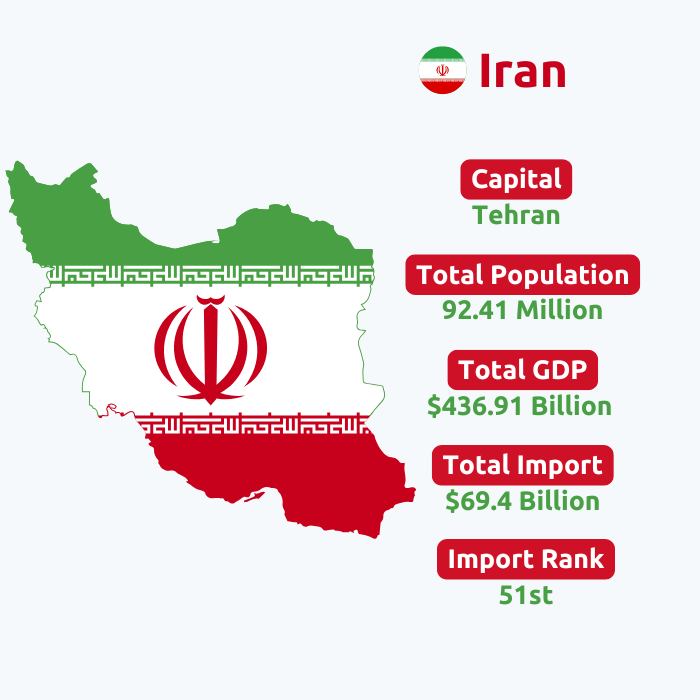
According to Iran Import Data and Customs Data, Iran imported goods worth $69.4 billion in 2024, marking a 4.5% increase compared to the previous year. As per Iran import statistics, the country is ranked the 51st largest importer globally. The total GDP of Iran stands at $436.91 billion, with imports accounting for 26.82% of GDP. Iran is a member of several regional trade frameworks and maintains strong trade ties with Asia and Europe despite sanctions.
According to Iran Customs Data, machinery and mechanical appliances ($13.4 billion) represent the country’s largest import category, while China ($18.2 billion) is Iran’s biggest import partner. Let’s explore Iran's import data for 2024–25, focusing on its top imports, major import partners, and emerging trade trends.