US Pharmaceutical Imports Data 2025: US Pharmaceutical Importers Database & Pharma Import Trends
Discover US pharma imports data 2025 with insights on pharmaceutical importers, trade volumes, & trends. Identify reliable importers & new market opportunities.

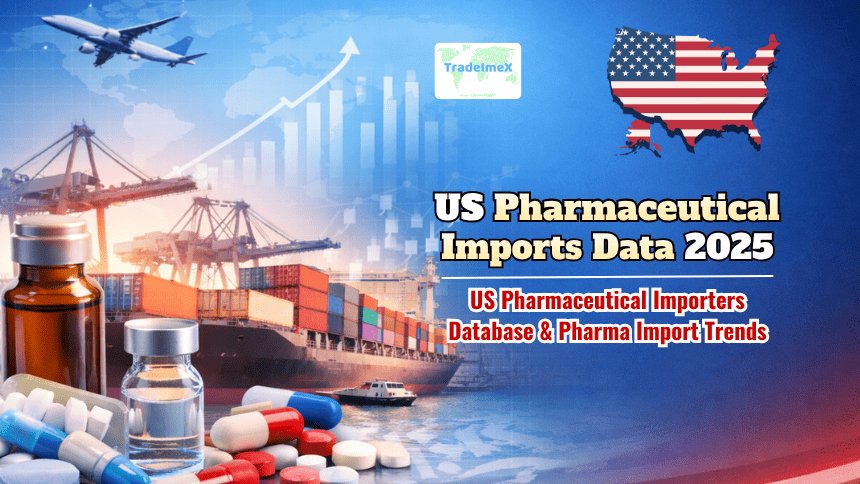
The United States remains the largest pharmaceutical market in the world, and increasingly, one of the most import-dependent. Despite having some of the biggest drug manufacturers globally, the U.S. relies heavily on overseas supply chains for finished medicines, biologics, vaccines, & active pharmaceutical ingredients (APIs). In 2025, this dependence became even more pronounced. Imports surged in both value and strategic importance, reshaping trade patterns, supply chains, & policy discussions. According to the latest US import data and pharmaceutical import data of the USA, the total value of US pharmaceutical imports reached a record high of $213.82 billion in 2025, a 1% increase from the previous year. The US imported pharmaceuticals worth $11.81 billion in the first 2 months of 2026, according to US pharma import data.
The USA is the largest pharmaceutical importer in the world, according to global trade data. This blog takes a detailed, data-driven look at U.S. pharmaceutical imports in 2025, including import values, top supplying countries, key importers, product categories, and emerging trends.
Overview of U.S. Pharmaceutical Imports in 2025
Pharmaceutical imports are no longer a supporting component of the U.S. healthcare system; they are central to it.
-
Total U.S. pharmaceutical imports were estimated at $190–205 billion in 2025.
-
Projections suggest imports will reach $225–240 billion, reflecting growth.
-
Pharmaceuticals account for over 8% of total U.S. goods imports.
This represents a multi-fold increase driven by rising healthcare demand, innovation, and globalized production networks, as per the US pharmaceutical import data.
Why the U.S. Depends on Pharmaceutical Imports
At first glance, it may seem counterintuitive. The U.S. is home to giants like Pfizer and Johnson & Johnson, so why import so much?
The answer lies in how modern pharmaceuticals are made.
1. Globalized Manufacturing Model
Drug production is fragmented:
-
APIs often come from Asia (India, China)
-
Advanced biologics are produced in Europe
-
Final formulations may happen elsewhere
This global specialization makes imports unavoidable.
2. Cost Efficiency
Generic drugs and APIs are cheaper to produce abroad, especially in:
-
India
-
China
-
Eastern Europe
This cost advantage drives sourcing decisions.
3. Innovation Concentration
High-value biologics and specialty drugs are manufactured in specific hubs like:
-
Ireland
-
Switzerland
-
Germany
These regions dominate advanced drug manufacturing.
US Pharmaceutical Imports by Country: Where Does the US Import Pharmaceuticals From?
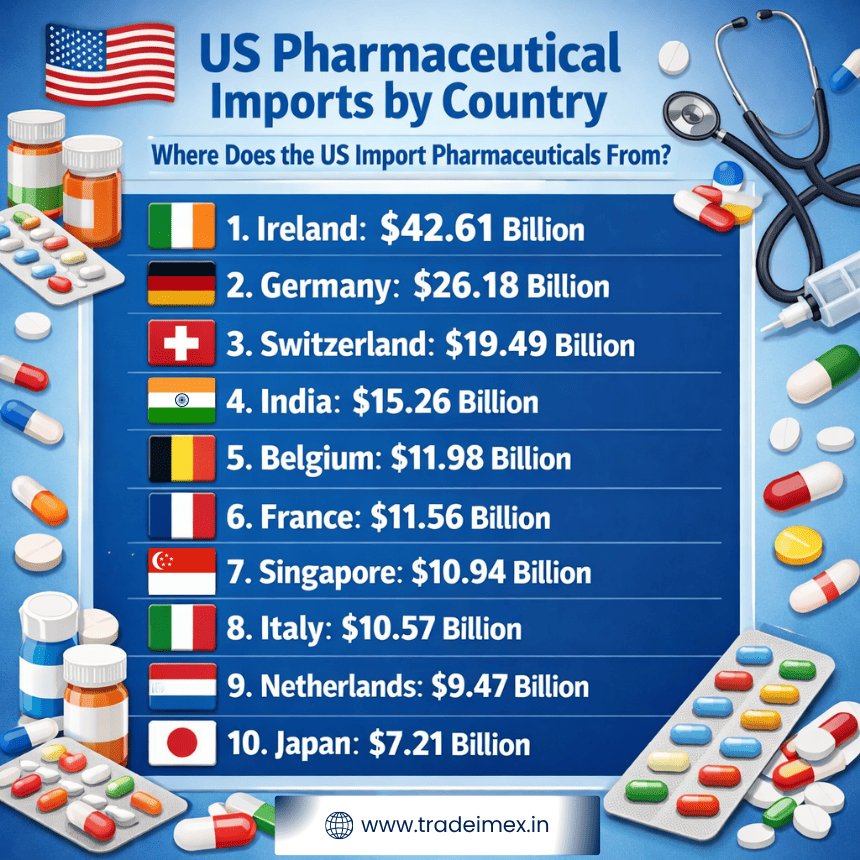
When it comes to pharmaceutical imports, the United States relies on a variety of countries to meet its healthcare needs. US pharmaceutical imports by country show that the United States imports a significant share of its pharmaceuticals from various countries. Some of the key players in supplying pharmaceuticals to the US include Ireland, Germany, Switzerland, India, and China. These countries are known for their advanced pharmaceutical industries and high-quality products that meet the demands of the US healthcare market. The top 10 pharmaceutical supplier countries to the US, as per the US pharmaceutical import shipment data for 2025, include:
1. Ireland: $42.61 billion (19.9%)
Ireland holds the top spot as the country from which the US imports the most pharmaceuticals. This can largely be attributed to Ireland's favorable corporate tax rates, which have made the country a hub for pharmaceutical manufacturing and research. Many major pharmaceutical companies have operations in Ireland, leading to a high volume of pharmaceutical imports to the US.
2. Germany: $26.18 billion (12.2%)
Germany is another significant source of pharmaceutical imports for the US, as per the data on US pharmaceutical imports from Germany by HS code. The country is known for its strong pharmaceutical industry and high-quality products, making it a preferred supplier for many healthcare companies in the US. Germany's strict regulatory standards & advanced technology also contribute to its popularity as a pharmaceutical import partner.
3. Switzerland: $19.49 billion (9.1%)
Switzerland is renowned for its high standards of quality and innovation in the pharmaceutical industry. The country is home to many pharmaceutical giants and research institutions, making it a key player in the global pharmaceutical market. Switzerland's reputation for producing cutting-edge medications and medical devices has made it a top choice for pharmaceutical imports by the US.
4. India: $15.26 billion (7.1%)
India is a major player in the global pharmaceutical industry, known for its cost-effective generic medications and active pharmaceutical ingredients. The country's vast manufacturing capabilities and skilled workforce have made it a prominent supplier of pharmaceuticals to the US. India's pharmaceutical exports to the US continue to grow, reflecting the country's importance as a key pharmaceutical import partner.
5. Belgium: $11.98 billion (5.6%)
Belgium is a significant source of pharmaceutical imports for the US, thanks to its strategic location in Europe and robust pharmaceutical industry. The country is home to many pharmaceutical companies and research centers, making it a reliable supplier of high-quality medications to the US. Belgium's strong regulatory framework & adherence to international standards have further solidified its position as a key player in the pharmaceutical import market.
6. France: $11.56 billion (5.4%)
France is known for its advanced healthcare system and pharmaceutical expertise, making it a popular choice for pharmaceutical imports by the US. The country's pharmaceutical industry is characterized by innovation and research, resulting in a wide range of high-quality medications exported to the US. France's pharmaceutical exports play a vital role in meeting the healthcare needs of the US population.
7. Singapore: $10.94 billion (5.1%)
Singapore is a key player in the global pharmaceutical market, known for its state-of-the-art manufacturing facilities and regulatory excellence. The country's strategic location in Asia and strong intellectual property protection make it an attractive destination for pharmaceutical imports by the US. Singapore's commitment to innovation and quality assurance has led to a steady increase in pharmaceutical exports to the US.
8. Italy: $10.57 billion (4.9%)
Italy is a prominent source of pharmaceutical imports for the US, valued for its high-quality medications and cutting-edge research. The country's pharmaceutical industry is characterized by a focus on innovation and sustainability, making it a trusted supplier of pharmaceuticals to the US. Italy's expertise in pharmaceutical manufacturing and stringent quality control measures has earned it a solid reputation as a reliable pharmaceutical import partner.
9. Netherlands: $9.47 billion (4.4%)
The Netherlands is considered a gateway to the European pharmaceutical market, offering access to a wide range of high-quality medications and medical devices. The country's advanced trade infrastructure and regulatory environment make it a preferred destination for pharmaceutical imports by the US. The Netherlands' commitment to quality and safety in pharmaceutical production ensures that the US receives top-notch products from Dutch suppliers.
10. Japan: $7.21 billion (3.4%)
Japan is a major player in the global pharmaceutical industry, known for its innovative research and development capabilities. The country's strong pharmaceutical sector and advanced technologies make it a valuable source of pharmaceutical imports for the US, as per the data on US pharma imports from Japan by HS code 30. Japan's commitment to excellence and high standards of quality has established it as a leading supplier of pharmaceuticals to the US market.
Why Ireland Leads
Ireland alone accounts for nearly 24% of U.S. pharmaceutical imports
Reasons include:
-
Tax advantages attracting multinational pharma firms
-
High concentration of biologics manufacturing
-
Export of high-value patented drugs
Recent data even shows massive surges in exports tied to new drug categories like GLP-1 therapies (used for diabetes and weight loss), which significantly boosted Ireland’s role in U.S. supply chains.
US Pharmaceutical Importers Database: Key Companies & Shipment Records

Pharmaceutical imports into the U.S. are dominated by large multinational companies and specialized distributors. The US pharmaceutical importers database highlights the key players importing medicines & pharmaceuticals into the USA. Pfizer Inc. leads the US pharma industry as the leading importer. The leading pharmaceutical buyers & importers in the US in 2025, include:
Top U.S. Pharmaceutical Importers (2025-26)
|
Rank |
Company |
Approx. Import Value (2025) |
|
1 |
Pfizer Inc. |
$40 billion |
|
2 |
Johnson & Johnson |
$32 billion |
|
3 |
Roche (Genentech USA) |
$30 billion |
|
4 |
AbbVie Inc. |
$26 billion |
|
5 |
Merck & Co. |
$22 billion |
|
6 |
Novartis USA |
$20 billion |
|
7 |
Sanofi US |
$18 billion |
|
8 |
Teva Pharmaceuticals USA |
$13 billion |
|
9 |
Viatris (Mylan) |
$12 billion |
|
10 |
Bristol Myers Squibb |
$11 billion |
Importer Categories
The U.S. pharmaceutical importers database typically includes:
-
Multinational pharma companies
-
Generic drug manufacturers
-
Specialty biologics firms
-
Pharmaceutical distributors
-
Hospital procurement organizations
These players manage complex global supply chains, importing finished drugs, APIs, and biologics.
US Pharmaceutical Import Data in the Last 10 Years

|
Year of Imports |
US Pharmaceutical Import Value ($) |
|
2015 |
$86.03 billion |
|
2016 |
$92.51 billion |
|
2017 |
$96.87 billion |
|
2018 |
$115.52 billion |
|
2019 |
$128.13 billion |
|
2020 |
$139.43 billion |
|
2021 |
$149.41 billion |
|
2022 |
$164.99 billion |
|
2023 |
$177.84 billion |
|
2024 |
$212.66 billion |
|
2025 |
$213.84 billion |

Key American Pharmaceutical Import Categories
Pharmaceutical imports are not uniform; they span multiple product types with very different value dynamics.
1. Finished Formulations (Largest Segment)
-
Share: 58–60% of total imports
-
Value: $115+ billion
Includes:
-
Tablets and capsules
-
Injectables
-
Oncology and chronic disease drugs
2. Biologics & Specialty Drugs
-
Share: 20–22% of value
-
Value: $40+ billion
These include:
-
Monoclonal antibodies
-
Immunotherapies
-
Rare disease treatments
Biologics dominate value despite low volume due to high prices.
3. Vaccines
-
Value: $11–14 billion
-
Stable but strategically critical segment
4. Active Pharmaceutical Ingredients (APIs)
-
Value: $14–16 billion
APIs are essential for domestic drug manufacturing, especially generics.
Major Trends in U.S. Pharmaceutical Imports
1. Shift Toward High-Value Medicines
The biggest growth is not in volume, it’s in value.
High-growth areas:
-
Oncology drugs
-
Immunotherapies
-
Autoimmune treatments
-
Rare disease drugs
These therapies are expensive and often imported.
2. Volume vs Value Gap
A critical trend:
-
Generics = high volume, low value
-
Biologics = low volume, high value
This imbalance is reshaping trade economics.
3. Supply Chain Diversification
Post-pandemic and geopolitical risks have driven:
-
Increased inventory buffers
-
Multi-country sourcing strategies
-
Greater scrutiny of API origins
Companies are reducing reliance on single-country suppliers.
4. Surge Due to Policy Uncertainty
Policy uncertainty significantly impacted import patterns:
-
Imports surged to $50+ billion in a single month (March 2025) due to stockpiling.
-
Proposed tariffs triggered inventory buildup and supply chain adjustments.
-
Discussions of tariffs up to 150–250% raised concerns over pricing and shortages.
This shows how policy can directly influence import volumes.
5. Europe’s Dominance in Supply
Europe continues to dominate U.S. pharma imports, as per the US Pharmacopeia report:
-
Ireland, Germany, Switzerland, and Belgium lead
-
High concentration of advanced manufacturing
-
Strong regulatory alignment with the U.S.
Even globally, pharmaceutical trade flows are heavily centered around the U.S.–EU corridor.
Challenges in the U.S. Pharmaceutical Import Market
1. Supply Chain Vulnerability
Heavy reliance on imports exposes the U.S. to:
-
Geopolitical risks
-
Trade restrictions
-
Manufacturing disruptions
2. Rising Trade Deficit
-
Pharma trade deficit projected at $125–135 billion
This reflects high import dependency.
3. Regulatory Complexity
Strict FDA standards:
-
Increase compliance costs
-
Limit the entry of smaller exporters
-
Favor established global suppliers
4. Tariff Risks
Potential tariffs could:
-
Increase drug prices
-
Disrupt supply chains
-
Encourage domestic manufacturing
But they may also create shortages if poorly implemented.
Opportunities for Exporters & Businesses
The U.S. pharmaceutical import market offers major opportunities:
1. API Exporters
Countries like India can expand:
-
Generic drug APIs
-
Essential medicines
2. Biologics Manufacturers
High-margin opportunity in:
-
Oncology
-
Immunotherapy
-
Rare disease treatments
3. Data-Driven Market Entry
Using a U.S. pharmaceutical importers database, businesses can:
-
Identify top buyers
-
Analyze shipment patterns
-
Target high-value clients
US Imposes 100% Tariffs on Pharmaceutical Imports: Impact on Global Trade Dynamics
A major development reshaping global pharmaceutical trade in 2026 is the United States’ decision to impose 100% tariffs on imported patented drugs, a policy shift highlighted in recent international coverage. This move is not just a regulatory change; it signals a structural transformation in how pharmaceutical supply chains will operate going forward due to the US pharmaceutical tariffs.
The policy primarily targets high-value patented medicines & active pharmaceutical ingredients (APIs), while generally exempting generics and certain essential medical products. The core objective is to boost domestic manufacturing, reduce dependency on foreign supply chains, and strengthen national healthcare security.
Short-Term Disruptions in Global Pharma Trade
In the immediate term, the tariff is expected to create price pressures and supply chain disruptions. Pharmaceutical companies heavily reliant on exports to the US may face significantly higher costs, forcing them to either:
-
Absorb margin losses
-
Increase prices
-
Or relocate production facilities to the US
This shift could temporarily lead to drug shortages or delayed supply adjustments, especially for specialized or patented treatments.
Long-Term Structural Shifts
Over the long run, the policy is likely to accelerate several key trends:
-
Regionalization of pharmaceutical manufacturing (e.g., “US +1” strategies)
-
Increased nearshoring and friend-shoring
-
Greater investment in domestic API production and R&D infrastructure
For global exporters, particularly in Asia & Europe, this could mean a reconfiguration of export strategies, with reduced dependence on the US market and increased focus on emerging regions.
Opportunities for Alternative Segments
Interestingly, not all segments are negatively impacted. Since generic drugs and medical devices are largely exempt, suppliers in these categories may actually benefit from:
-
Rising demand for cost-effective alternatives
-
Increased global diversification of sourcing
-
Expansion into non-US markets amid shifting trade flows
This creates a dual-impact scenario, while innovative drug exporters face barriers, manufacturers of generics and medical equipment may gain a competitive advantage.
Strategic Takeaway: The US tariff policy marks a turning point in global pharmaceutical trade. It underscores a broader trend: healthcare supply chains are becoming more localized, strategic, and politically influenced. Companies that proactively adapt, by diversifying production, optimizing supply chains, and targeting alternative markets, will be better positioned to navigate this evolving landscape.
Future Outlook: What Lies Ahead?
The U.S. pharmaceutical import market is expected to continue growing, but with structural shifts:
Key Predictions
-
Imports could exceed $250 billion within a few years.
-
Biologics will dominate value growth.
-
Supply chains will become more regionalized.
-
Policy (tariffs, domestic incentives) will play a larger role.
At the same time, the U.S. will likely attempt to balance:
-
Import dependence vs domestic manufacturing
-
Cost efficiency vs supply security
Conclusion and Final Thoughts
In conclusion, the U.S. pharmaceutical import landscape in 2026 reflects a complex and evolving global system. With imports nearing $200 billion and growing steadily, the country’s reliance on international supply chains is deeper than ever.
Key takeaways:
-
The U.S. is the largest pharmaceutical importer globally.
-
Imports are driven by biologics, specialty drugs, & manufacturing models.
-
Ireland, Germany, Switzerland, and India are key suppliers.
-
Major companies like Pfizer and Johnson & Johnson dominate imports.
-
Policy changes, especially tariffs, are emerging as a major disruptor.
For businesses, the opportunity lies in understanding this ecosystem through data, particularly through our detailed importer databases and trade intelligence tools. The future of U.S. pharmaceutical imports will not just be about volume. It will be about value, innovation, and supply chain resilience.
Note For Our Readers
We hope this blog has given you a clear, data-driven view of the U.S. pharmaceutical import landscape in 2025, from the growing reliance on global supply chains and the dominance of key exporting countries to the rising importance of biologics, APIs, and high-value specialty drugs. As the pharmaceutical industry continues to evolve, shaped by innovation, regulatory shifts, and geopolitical factors, access to accurate & timely US export-import data is becoming essential for making informed business decisions.
If you’re looking to go beyond high-level insights & need deeper, actionable intelligence, TradeImeX can support your business. With access to detailed U.S. pharmaceutical importers & buyers data, you can explore & search live US pharma import data by country and HS codes, along with real-time updates that reflect current market trends. Whether you want to identify active importers, connect with verified buyers, track competitor movements, or analyze demand patterns, our customized data solutions can help you move faster and make smarter decisions. Reach out at info@tradeimex.in to strengthen your position in the global pharmaceutical trade market.
Share
What's Your Reaction?
 Like
0
Like
0
 Dislike
0
Dislike
0
 Love
0
Love
0
 Funny
0
Funny
0
 Angry
0
Angry
0
 Sad
0
Sad
0
 Wow
0
Wow
0