What the G7 Summit 2025 Means for Global Trade: Key Agreements & Policy Shifts
Explore how the 2025 G7 Summit is shaping global trade with major agreements on tariffs, bilateral trade deals, and economic implications.


The 51st G7 Summit held June 15–17, 2025, in Kananaskis, Alberta, Canada, unfolded during a volatile geopolitical landscape marked by cross-border wars, escalating energy prices, and renewed tariff threats, especially from the United States. The G7 Summit, consisting of the world's most advanced economies - the United States, Canada, France, Germany, Italy, Japan, and the United Kingdom - is a crucial platform for discussing global economic issues, including trade agreements and policy shifts.
As we look ahead to the G7 Summit in 2025, it is essential to understand what key agreements and policy shifts may mean for global trade data. In this article, we will explore what the G7 Summit 2025 means for global trade, highlighting the key agreements and policy shifts that are likely to impact businesses and consumers worldwide. While the Summit lacked a unified final communiqué, several notable bilateral progressions emerged:
- UK–US trade framework: tariffs reduced for autos (25 to 10%) and removal of aerospace levies. Steel tariffs and quotas remain unresolved.
- Canada–US trade negotiations: a 30-day deadline to resolve U.S. tariffs on steel, aluminum, and autos (This can impact the US exports to Canada).
- Critical minerals strategy: G7 consensus around securing transparent, resilient supply chains beyond China's influence.
- Non-issuance of a joint communiqué on Ukraine: friction over U.S. reluctance, amid Trump’s premature departure.
Implications: Targeted tariff mitigation signals practical optimism, but broader policy fragmentation, driven by U.S. protectionism and geopolitical shocks, forecasts ongoing uncertainty. However, innovation in minerals alignment hints at a strategic redirection in global trade resilience.
Importance of the G7 Summit
The G7 Summit serves as a forum for key leaders to come together and discuss pressing economic issues that impact their respective countries and the world as a whole. Decisions made at the G7 Summit have far-reaching consequences for global trade, as the member countries account for a significant portion of the world's GDP and international trade.
Summit Context: Geopolitical & Economic Palette
Leadership & Stakes
- Participants: G7 countries (Canada, France, Germany, Italy, Japan, UK, US) alongside EU Commission/Council leaders and select invitees like Ukraine, South Korea, India, and Mexico.
- Host: Canadian PM Mark Carney emphasized economic alignment, Ukraine support, supply chains, and security.
Global Backdrop
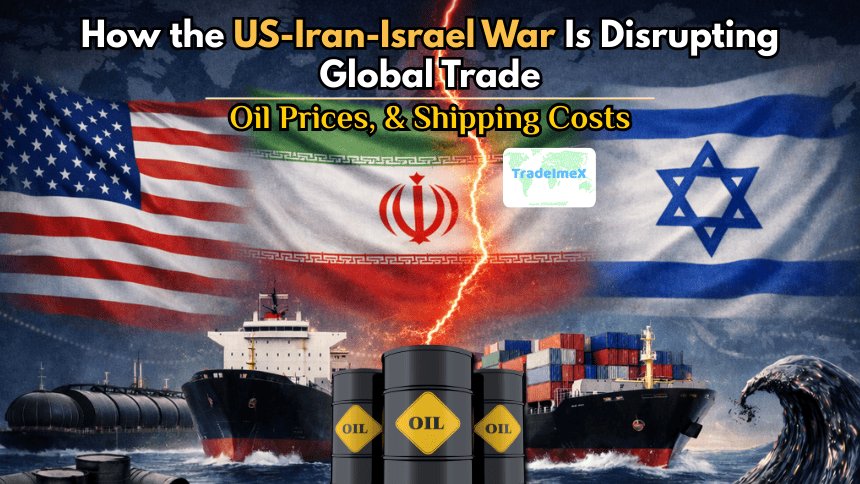
- Middle‑East flare-ups: Israel–Iran hostilities led to immediate disruptions in shipping, insurance, and energy pricing.
- Russia–Ukraine war: Zelenskyi present, but the G7 faltered in committing collective support, no communique due to U.S. resistance.
- China’s trade controls: The April export curb on rare-earth minerals by Beijing triggered supply-chain alarms.
- U.S. tariff resurgence: Under President Trump, aggressive trade moves resumed, imposing 25% tariffs on autos and metals, and up to 50% punitive duties threatened after the July 9 deadline.
- Global economic volatility: Markets reacted sharply to tensions, oil spiked by 3%, and U.S. retail sales dropped 0.9% in May.
Key Trade Deals & Policy Shifts: G7 Trade Agreements
UK–US Trade Framework
Mechanics:
- Reduction of UK auto tariffs: 25% to 10%
- Full elimination of aerospace duties
- Pending quotas on UK steel/aluminum imports are under negotiation.
Market Impact:
|
Sector |
Prospective Gains |
Companies |
|
Automobiles |
More competitive in the U.S. market |
Jaguar Land Rover, Mini |
|
Aerospace |
Cost relief for exports |
Rolls-Royce, BAE Systems |
|
Steel & Aluminum |
Pending quotas create uncertainty |
ArcelorMittal, Tata Steel |
Strategic Notes
- Starmer and Trump personally signed the framework at the G7 Summit.
- EU urged stability, cautioning against ongoing protectionism.
Canada–US Trade Initiative
Summary:
- A 30-day window to negotiate tariff relief on Canadian exports of steel, aluminum, and autos.
- Conflicting views: The U.S. advocating for tariffs in place versus Canada pushing for full removal.
Risks:
- High stakes: Canada's top export items affected; unresolved tariffs could dampen industrial output, as per Canada export data.
- Bilateral alone—no G7-wide mechanism; outcome hinges on political will and July 9 U.S. tariff deadline.
Critical Minerals Framework
Provisions:
- Transparent, responsible extraction commitments
- Building resilient supply chains free from single-nation dependencies (notably China).
Relevance:
- Essential for batteries, EVs, defense, and semiconductors.
- China’s export restrictions caused major disruptions.
Outcomes:
- Joint investments and resource diversification
- Risk-sharing across the G7 and allies
- Price stabilization via coordinated reserves and supply behavior
Trade Structure & Imbalance Recognition
- Finance ministers pre-summit acknowledged imbalances, omitted climate/Ukraine references.
- G7 draft pushed for lifting broad tariffs and control over supply-chain chokepoints.
Frictions, Gaps & Limitations
No G7 Joint Communiqué on Ukraine & Trade
- U.S. opposition prevented unified statements, weakening the collective stance.
- Zelenskyi highlighted this rupture, Canada reaffirmed unilateral Ukraine aid, but multilateral unity frayed, which can harm Ukraine trade data.
U.S. Protectionism & Tariff Threats
- Trump leverages the July 9 deadline to press for “reciprocal” tariffs up to 50%.
- Tensions persist with the EU and Canada; they risk economic disruption unless a resolution is reached by the deadline.
Japan–US Stalemate
- Japan’s PM Ishiba failed to secure relief from 25% auto tariffs, which can further impact Japan’s vehicle export data.
- Potential GDP contraction (1%) threatens political fallout ahead of Japanese elections.
EU–US Defensive Position
- EU leadership emphasized defense cooperation over trade conflict, appealing for tariff restraint, which could impact the Europe trade data.
- But with Trump’s stance unyielding, trust remains fragile, and no breakthroughs are expected beyond the July 9 pause.
Geopolitics & Trade Disruptions
Middle East Turmoil (Israel–Iran)
- Trump left the Summit one day early, citing the crisis.
- The joint G7 statement demanded de-escalation and a Gaza ceasefire.
- Side effects: Rising oil prices (+3%), skyrocketing shipping premiums, transport strains.
Ongoing Russia–Ukraine Conflict
- Canada announced fresh unilateral aid; the G7 group statement was rejected by the U.S.
- Zelenskyi’s disappointment underscored fractured alliance dynamics.
Strategic Realignment with China
- Mineral strategy is partly directed at reducing dependency on Chinese supply.
- G7 is also exploring joint infrastructure investments (via PGII) to rival China’s Belt & Road.
Global Market & Investment Impact
Sector Overviews
- Autos & Aerospace
- UK gains from tariff cuts; Japan and Canada await similar outcomes.
- Toyota, Honda, JLR, and Rolls-Royce could see export boosts.
- Steel & Aluminum
- Canada–U.S. deal could prevent further harm to steelmakers.
- EU metals firms under pressure due to potential U.S. tariffs.
- Mining and Critical Minerals
- Stimulus in mining, processing, and recycling investments.
- Rising investment appetite for lithium, cobalt, and rare earths.
- Shipping & Insurance
- Middle East tensions elevate freight costs, affecting companies sourcing energy or routing tankers.
Volatility & Risk Factors
- Tariff deadlines: July 9 marks a critical period for policy change or escalation.
- Geopolitical flare-ups: Middle East or European crises can forecast sudden market shifts.
- Mining policy rollout: Slow execution could hamper supply-chain strategy outcomes.
- Currency oscillations: Tariff uncertainty may fuel USD volatility.
Recommendations for Stakeholders
Trade Bodies & Companies
- Diversify suppliers: Map alternative sources for minerals and materials.
- Engage in bilateral talks: Small-country exporters should leverage the Canada mechanism.
- Plan scenarios: Forecast across tariff/tension gradations.
Investors & Finance Firms
- Monitor 30-day windows: Watch UK, Canada, Japan timelines.
- Rebalance portfolios: Consider exposure to high-growth sectors like clean-tech and EV minerals.
- Use hedging: Employ commodity and FX hedges to buffer volatility.
Governments & Policymakers
- Formation of G7 supply initiatives: Fast-track critical mineral public-private partnerships via PGII.
- Coordinate across sectors: Integrate trade, climate, and defense, particularly EU–US collaboration.
- Push non-protectionist policies: Align with G7 finance guidance to avoid tariff cycles.
Global Trade Under Pressure: Trade Data, Deals, & a Divided Front
The 2025 G7 Summit took place against a backdrop of major disruptions and recalibrations in global trade, reflected in key data indicators:
- Global Trade Growth Stagnation
- World merchandise trade volume was forecasted to grow only 1.7% in 2025, down from 2.3% in 2024 (WTO estimate).
- Export volumes from advanced economies (like the G7) slowed due to tariffs, conflict zones, and trade instability.
- Top trade disruptions:
- Red Sea shipping delays from the Israel–Iran conflict
- Ukraine war bottlenecks for wheat, grain, and fertilizers
- Tariff uncertainty from Trump-led U.S. policies
- Tariff Landscape in G7 Economies
|
Country |
Key Tariffs Pre-Summit |
Post-Summit Status |
|
US |
25% on autos, 50% on metals (planned) |
Maintained; deals in motion with the UK, Canada |
|
UK |
Tariff retaliation on select US goods |
Removed tariffs in the new bilateral framework |
|
Canada |
Steel/aluminum tariffs imposed by the US |
Negotiating relief (30-day window) |
|
Japan |
Affected by US auto tariffs |
No resolution yet |
- Critical Minerals Trade
- G7 imports 70% of rare earths and 60% of lithium from China (2024 China export data).
- China’s April 2025 export curbs prompted the G7 to agree on:
- Diversified sourcing
- Increased domestic mining
- Joint investment pipelines
Carney’s Trade Agenda and Trump’s Tariff Push
At the G7 Summit 2025, a key moment came when Canadian Prime Minister Mark Carney met with U.S. President Donald Trump to try and break their tariff deadlock. While no deal was finalized, both sides agreed to keep negotiating, setting a 30-day window to reach a potential trade and security agreement. Carney, aiming to reduce Canada’s economic dependence on the U.S., also used the summit to pitch trade opportunities to other leaders, securing progress on a defense pact with the EU.
Trump, meanwhile, focused heavily on cutting trade deals before his self-imposed July 9 tariff deadline. He made visible progress with the UK, finalizing parts of a tariff-reduction deal with Prime Minister Keir Starmer. Japan also committed to continuing trade talks, though key issues remain unresolved. Overall, the summit showed two sharply different trade styles: Carney’s strategic, long-game approach versus Trump’s high-pressure, deal-by-deadline tactics.
How the G7 2025 Summit Concluded
Achievements:
- UK–US Bilateral Trade Deal: Tariff cuts on autos and aerospace; groundwork laid for steel resolution.
- Canada–US Negotiation Window: 30 days to reach an agreement on key exports.
- Critical Minerals Strategy: Coordinated G7 plan to reduce dependency on China and build secure, sustainable supply chains.
Shortcomings:
- No Joint Communiqué: Due to U.S. obstruction, the G7 failed to present a united front on Ukraine and trade policy.
- Rising Fragmentation: "G6+1" dynamics emerged, with allies bypassing collective agreements for bilateral talks.
- Protectionist Undercurrent: Trump's push for new tariffs introduced volatility across all trade discussions.
The G7 Summit 2025 concluded with incremental progress through bilateral trade alignments, but no unified multilateral breakthrough. The trade tone remains cautious, shaped by U.S. unpredictability and the urgent need to adapt to shifting global supply chains. Markets and policymakers are watching the July 9 tariff deadlines and critical minerals execution as key next steps.
What to Watch: Upcoming Milestones
- July 9: U.S. tariff deadline for reciprocal tariffs; potential cutoff point.
- By mid-July (Canada–US): Deadline for resolving metal and auto tariffs.
- Japan–US follow-up: Ishiba and Trump to speak post-NATO meeting for further negotiations.
- Critical minerals rollout: Watch for infrastructure funding announcements and investment pipelines.
- Geopolitical shifts: Middle East ceasefire or escalation; Russia-Ukraine dynamics; China policy changes.
Comparative Summary for the G7 Summit
|
Dimension |
Progress |
Tensions |
|
UK–US trade deal |
Auto tariffs reduced, aerospace duties cut |
Steel quotas unresolved |
|
Canada–US negotiations |
30-day framework for metal/autos tariffs |
U.S. insistence on some tariffs |
|
Japan–US relations |
Talks ongoing post-summit |
No relief on auto tariffs |
|
Critical minerals |
Common G7 strategy agreed |
Dependency is still high; implementation is slow |
|
G7 unity |
Strategic mining, de-escalation gains |
No Ukraine/trade communique; protectionism persisting |
|
Market volatility |
Clarity in targeted sectors |
Broader fragility amid geopolitical shocks |
Conclusion and Final Verdict
The G7 Summit 2025 delivered structured, bilateral achievements, especially between the UK and US, and potentially Canada and the US, offering a temporary refuge from the curse of blanket protectionist policies. The cornerstone critical minerals strategy promises foundational re-engineering of global supply chains. Yet the Summit also starkly revealed a fractured alliance: the absence of a collective communiqué on Ukraine, persistent bilateral tensions, and a looming U.S. tariff timetable expose a fragmented multilateral landscape. Geopolitical stress further compounds trade volatility.
Going forward, stakeholders must navigate a landscape of partial wins and persistent risks. Success lies in leveraging bilateral breakthroughs, diversifying supply chains, and proactively engaging in public-private mineral alliances. The coming weeks, especially surrounding July 9, may well define whether these policies coalesce into meaningful stability or unravel under repeated shocks.
We hope you found our in-depth and interactive blog report on What the G7 Summit 2025 Means for Global Trade: Key Agreements & Policy Shifts both informative and actionable. Stay ahead of global trade trends and access live import-export shipment data with TradeImeX, your trusted partner in trade intelligence and data-driven insights. Contact us at info@tradeimex.in to get exclusive & customized database reports on Global trade data.
Share
What's Your Reaction?
 Like
0
Like
0
 Dislike
0
Dislike
0
 Love
0
Love
0
 Funny
0
Funny
0
 Angry
0
Angry
0
 Sad
0
Sad
0
 Wow
0
Wow
0